
Teaching the Holocaust - the ‘whys’ and ‘hows’
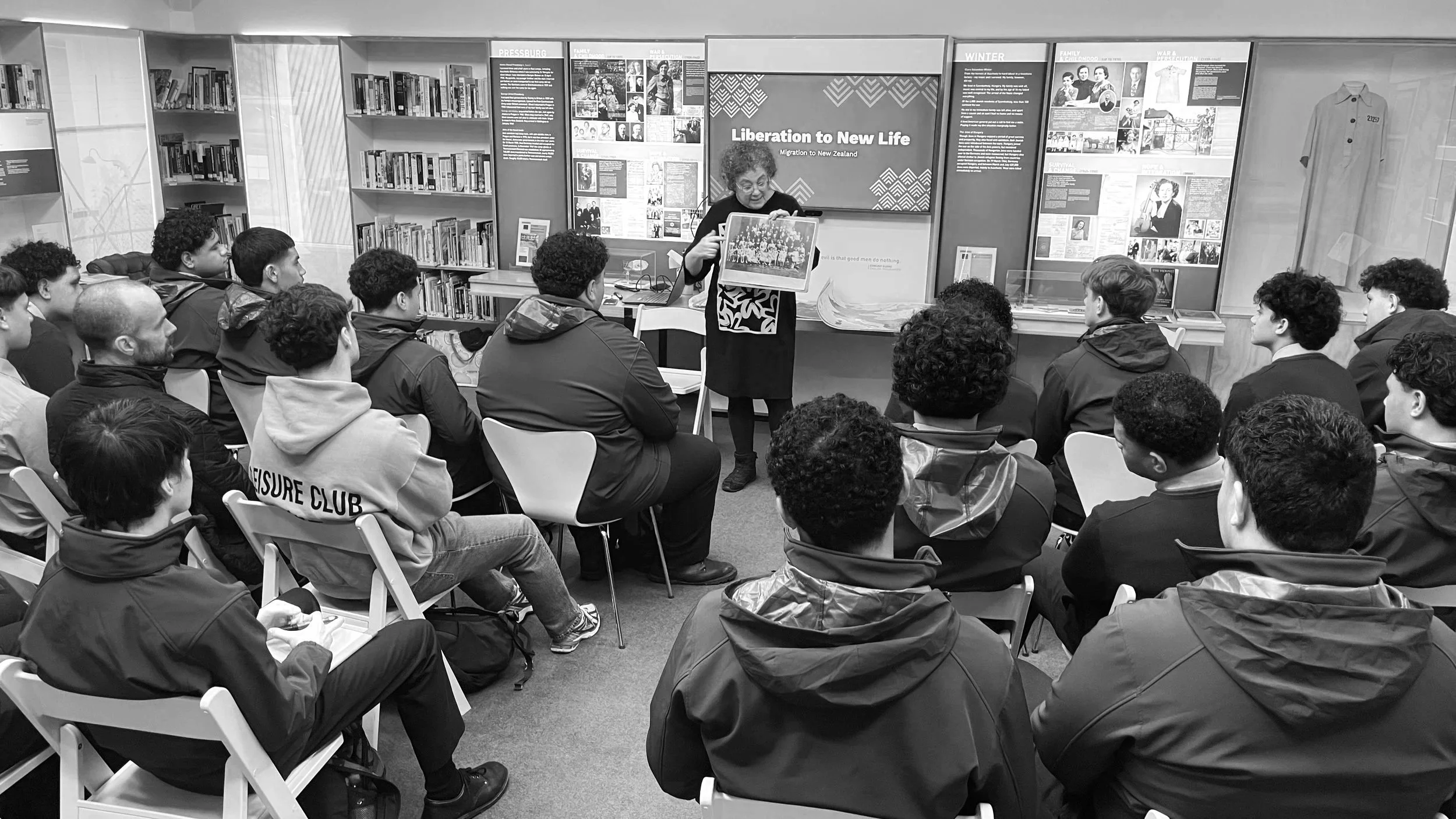
Why teach the Holocaust?
Teaching the Holocaust is one of the most profound and rewarding experiences a New Zealand educator can facilitate, and our goal is to ensure you feel confident and supported in your journey. While the subject matter is undeniably challenging, it offers a critical lens through which students can examine the human condition, the fragility of democracy, and the enduring power of moral courage.
The Holocaust was not an accident of history; it was the result of specific choices made by individuals, organisations, and governments. By exploring these choices, students come to understand that democratic values are not self-sustaining; they must be nurtured and protected by every generation.
The foundations: where to begin
The key to an effective unit is grounding students in the "what" before embarking on the "why" or "how."
-
Australian educator Zvi Civins recommends starting by humanising the victims. Who are the Jewish people? How do they fit into broader European history? By understanding the culture and life that existed before the Holocaust, students can better grasp the scale of the loss.
-
Before engaging with the history, students must have a solid grounding in key terminology, including genocide, Holocaust, and antisemitism.
-
To help students navigate the sequence of events, we recommend a four-stage pedagogical approach:
Identification (The Nuremberg Laws and social exclusion)
The Killings in the East (The Einsatzgruppen and the invasion of the Soviet Union)
The Camps (The development of the concentration camp system)
The Final Solution (The industrialised mass murder)
Do’s and don’ts of Holocaust education
Drawing on the world-leading expertise of Yad Vashem, we advocate for a pedagogical approach that prioritises historical accuracy and student safety.
-
Give a human face to all involved-perpetrators, victims, bystanders, and rescuers. Avoid letting people become mere statistics. Focus on the process of how the Holocaust unfolded, not just the outcomes.
-
Help students understand that victims faced moral dilemmas where no option offered a "good" outcome.
-
Emphasise that the Holocaust occurred in a modern, sophisticated society, proving that education and "progress" alone do not prevent atrocities from occurring.
-
Include the stories of survivors and their transition to daily life after liberation, particularly their journeys to Israel and New Zealand.
-
What separated the rescuer from the bystander? Explore the emotional intelligence and moral frameworks of those who chose to resist.
Teaching safely: "safely in, safely out"
Our core pedagogical anchor is “safely in, safely out”. It means guiding students through a challenging topic and ensuring they emerge on the other side with compassion, understanding, and their questions resolved.
-
We strictly discourage the use of gruesome imagery, including that of piles of bodies. Meaning is found in individual stories, not in the "gore" of the outcomes.
-
By telling the stories of life before and after the Holocaust, we allow students to empathise with the victims as people rather than as doomed subjects.
-
Ensure the depth of the history matches the emotional maturity of your students.
“Meaning is not gleaned from piles of bodies or statistics... but rather in the individuals, families and communities that were each worlds in and of themselves. This is what people can empathise with. This is what they can take with them into their own lives.”
Further teaching guidelines
For those looking to deepen their professional practice, we recommend the following essential resources:
USHMM guidelines for teaching the Holocaust: A comprehensive framework for best practices.
The pedagogical approach to teaching the Holocaust: Insights from Shulamit Imber (Yad Vashem) on how to facilitate meaningful reflection.
Two perspectives on the Holocaust: A resource for looking at the event through multiple historical lenses.