New Zealand survivor stories
Our shared history
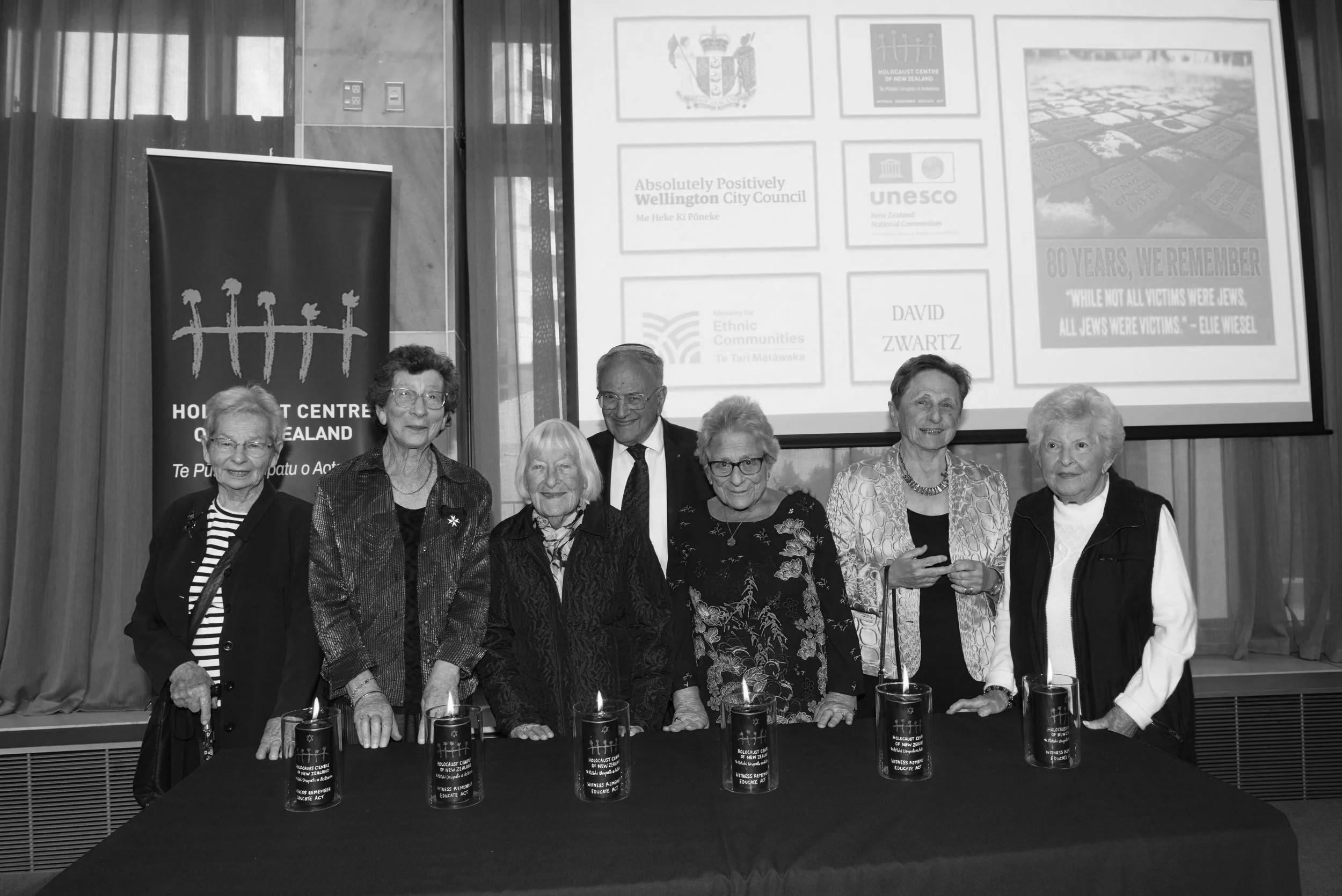
The Holocaust took place in Europe, but its ripples reached the furthest corners of the globe. For many who survived the ghettos, the camps, and the years of hiding, New Zealand became more than just a place of safety; it became home.
This section explores the enduring connection between the Holocaust and New Zealand. Here, you will find the voices of survivors who rebuilt their lives in our communities, a timeline of how New Zealand responded to the crisis as it unfolded, and the ongoing work of their descendants to keep these stories alive. By engaging with these local histories, students and teachers can bridge the gap between a global tragedy and our own national heritage.
New Zealand survivors: Voices and memoirs of resilience
“Whoever listens to a witness becomes a witness”
There is no substitute for hearing history directly from those who lived it. This collection features video testimonies from survivors who settled in New Zealand. Through these clips, students can move beyond statistics to understand the personal impact of the Holocaust – the loss, the survival, and the courage it took to start again in a foreign land.
New Zealand survivor stories documentary
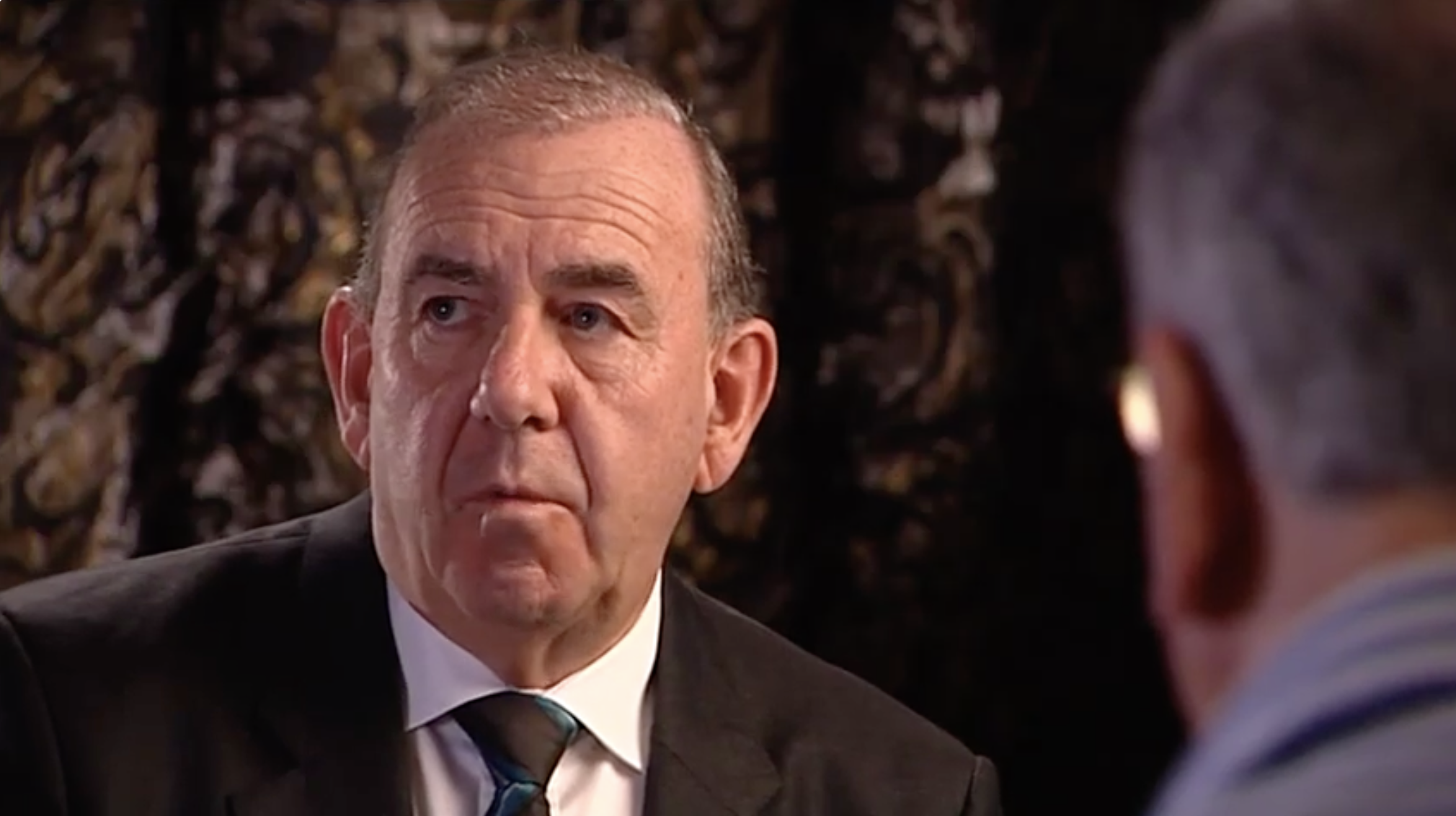
In this documentary, interviewer Ian Fraser speaks with Holocaust survivors: Bob and Freda Narev (Germany / Poland), Dora Suuring - a member of the Dutch resistance whose rescue efforts involved forging identity cards (The Netherlands) and Steven Sedley MNZM (Hungary).
This video also includes interviews with Hermina (Mieke) van der Schaaf (Righteous Among the Nations, the Netherlands), and Joel Porus (Bob & Freda Narev's grandson)
Commissioned in 2010 as part of the Anne Frank Exhibition, this documentary features interviews interspersed with images from the Anne Frank House archive.
Dora Suuring lived in the Netherlands at the time of the Second World War and knew Anne Frank; she remembered her as a polite, intelligent girl who stopped by her home to drop off schoolwork - her husband taught in a special [Jewish] school attended by Anne Frank.
Child who survived Terezin
Vera Egermayer MNZM
Born: Prague, Czechoslovakia,1940
Experience: Child survivor of the Terezín (German: Theresienstadt) Ghetto/Concentration Camp/Transit Camp
Summary
Vera was only four years old when she was transported to the Terezín Ghetto in March 1945, one of the youngest victims on the final train out of Prague. While her Jewish mother had already been interned, Vera had been left in a children's home for safety after her non-Jewish father was sent to a forced-labour camp for refusing to divorce his Jewish wife. This act of courage by her father likely saved the lives of both Vera and her mother.
The New Zealand connection: Vera’s family immigrated to Wellington in 1949, where they already had relatives. Despite being baptised as a child in an attempt to blend-in and hide from the past, Vera later reclaimed her Jewish identity and became a tireless advocate for Holocaust education. She served as New Zealand’s honorary Consul in Prague for 18 years and was a founding member of the Holocaust Centre of New Zealand. Most notably, she was the driving force behind the New Zealand Children’s Holocaust Memorial, a collection of 1.5 million buttons representing the children murdered during the Holocaust. The emblem for the memorial is Vera's cousin Josef (Pepicek) Mautner, who was a child victim.
Nazi target of cultural and artistic destruction
Klára (“Clare”) Galambos-Winter
Born: Budapest, Hungary, 1923
Passed: Wellington, New Zealand, 2014, aged 90
Experience: Survivor of the Auschwitz-Birkenau and Hessisch Lichtenau (Allendorf) camps.
Summary: Clare was a promising 20-year-old violinist when the Nazis invaded Hungary in 1944. Within months, her world was shattered; her family was forced into a ghetto and then deported to Auschwitz-Birkenau. Upon arrival, Clare was separated from her parents and younger brother – none of whom survived the selection. She was later sent to Allendorf, a sub-camp of Buchenwald, where she was forced to work in a dangerous munitions factory, handling toxic chemicals to create explosives. Throughout the horror, she held onto the memory of her music as a form of spiritual survival.
The New Zealand connection: Clare arrived in New Zealand in 1949 with her husband, also a survivor. She brought her violin with her – an instrument that became her voice in her new home. She joined the NZBC Symphony Orchestra (now the New Zealand Symphony Orchestra) and played with them for over 30 years. Clare was a significant benefactor to Holocaust education and the New Zealand music community, establishing prizes at Victoria University of Wellington. Before she passed away in 2014, she spoke often about the importance of tolerance, famously stating that while she could never forget, she chose not to live with hate.
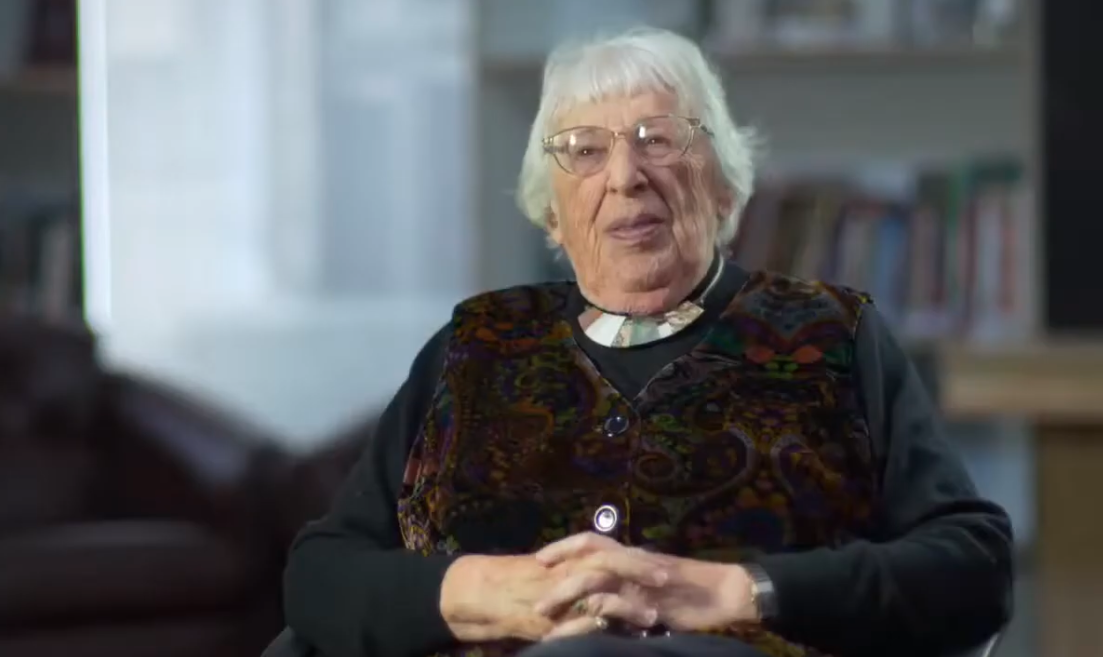
Targeted by the Einsatzgruppen
Zofia (Zosia/Sophie) Galler (née Minc)
Born: Katowice, Poland, 1929
Passed: Wellington, New Zealand, 2012, aged 83
Experience: Survivor of mass shootings, the Lubaczów Ghetto, and survival in hiding.
Summary: In 1941, Zofia and her parents were interred in the Sosnowiec ghetto. In 1942, she and her mother were forced to watch the execution of her father, who had been caught trying to arrange an escape for his wife and daughter. By the end of 1942, Zofia and her mother had been deported to the Auschwitz-Birkenau death camp. Her mother suffered gangrene and had her right foot cut off without anaesthetic, one day before being sent to the crematorium. Zofia survived 3 years in Auschwitz before being forced on a death march to Germany. She escaped the death march and came upon American soldiers.
The New Zealand connection: After serving in the military in Israel, Zofia met Anton Galler in 1952. Anton was a Polish Army veteran who had fought alongside New Zealand soldiers at Tobruk and Monte Cassino, later immigrating to New Zealand in 1947 to establish a business in Wellington. After returning to Israel to seek a bride, he met Zofia, and the couple emigrated to New Zealand together later that year. Zofia raised two sons who are both doctors.
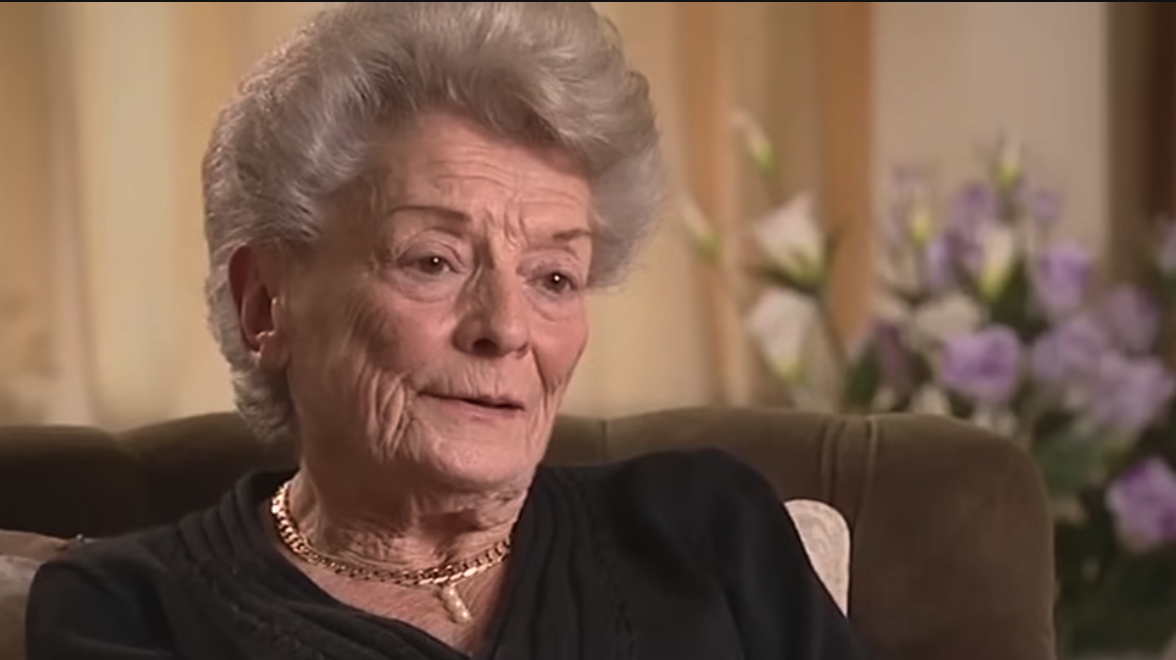
Marked for death on her 8th birthday
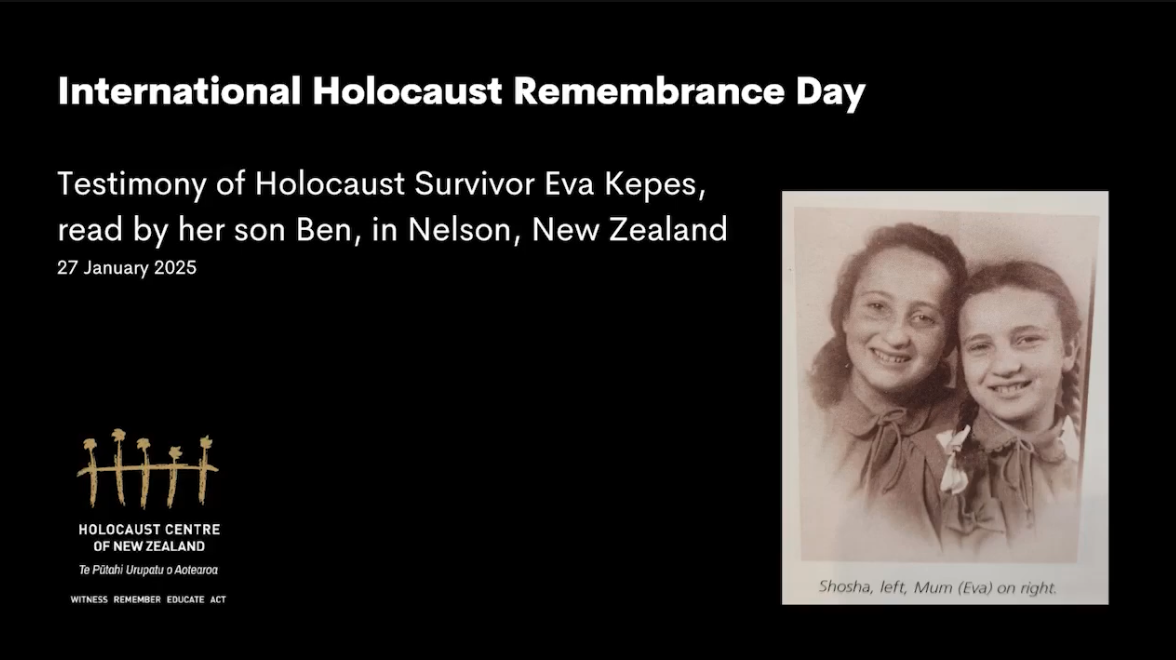
Eva Kepes
Born: Törökszenimiklós, Hungary, 1936
Experience: Survived cattle car transportation, an agricultural labour camp in Austria, Bergen-Belsen concentration camp, and a ‘death train’ transport, before liberation by the American forces.
Summary: Eva lived with her parents and older sister Shosha in a town called Törökszentmiklós in Hungary. On April 5, 1944, under Nazi occupation, Hungarian authorities ordered all Jews in Hungary to wear a yellow star. April 5, 1944, was Eva's 8th birthday. Her childhood had already been shadowed by escalating persecution. In 1940, her father was permanently taken away to a forced labor camp, leaving young Eva, her mother, and her older sister to navigate an increasingly hostile environment – where even small everyday moments, like her sister ice skating, ended in antisemitic attacks by local Nazi youth. In the spring of 1944, Eva’s family was driven into a crowded local ghetto before being moved to a selection camp in Szolnok.
The New Zealand Connection: During the Hungarian Revolution of 1956, Eva made her own daring escape across the border. Her journey to freedom took her across the globe by ship from Hamburg, through Australia, and finally to Dunedin, New Zealand, in 1957. She married that same year and rebuilt her life into a legacy of resilience.
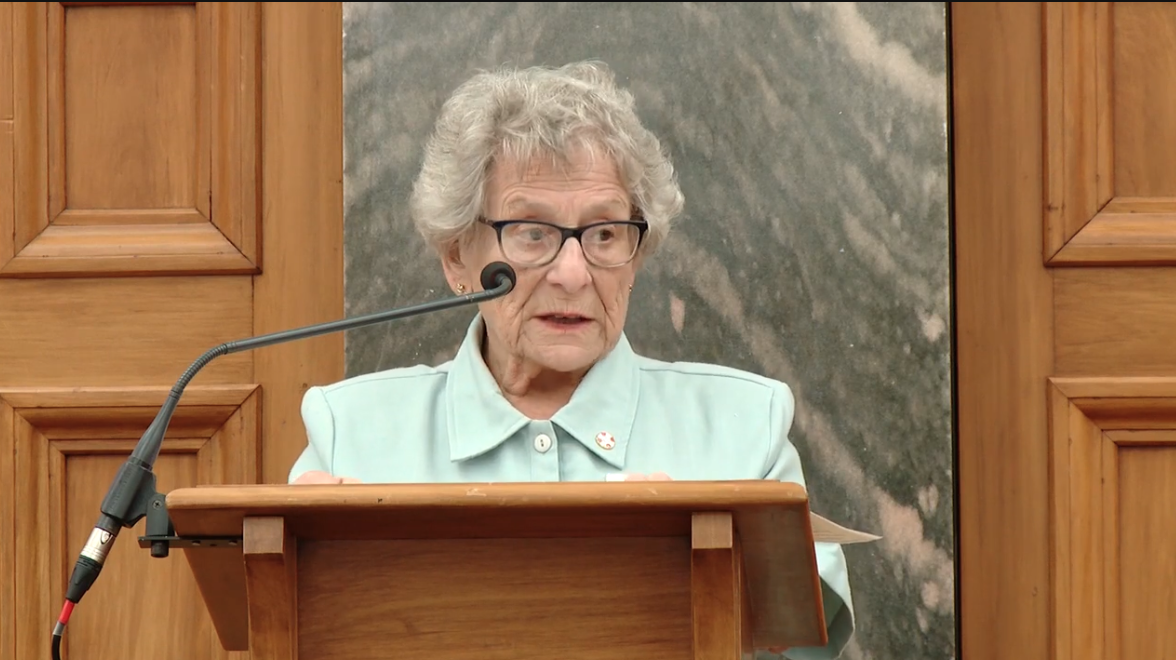
Survival hiding in Budapest
Mary Mowbray CNZM (née Erdős)
Born: Budapest, Hungary, 1935
Experience: Survivor of the Budapest Ghetto and "Yellow Star" houses.
Summary: Mary was born in Budapest in 1935 to a secular Jewish family. She recalls the family nanny, Annus Hircsu – who would later become central to their survival – being a de facto family member. In 1942 Mary’s father was drafted into a forced Jewish labour unit, where he died within four months. By 1944 Mary and her family were required to wear a yellow star, keep curfew, and their house was designated with a Star of David. In November 1944, the Nazis deported Mary’s mother to the concentration camps. After Mary and her brother John (Jankó) were moved into a Red Cross home, Annus rescued them; she used false papers to pass the children off as her own. After the end of the war, Mary discovered that her mother had died shortly after liberation. After Mary and her brother left for New Zealand, Annus had a relapse of tuberculosis and died within 6 months. Mary later initiated proceedings which resulted in the recognition of Annus Hircsu as Righteous Among the Nations in 1992.
The New Zealand connection: After making contact with relatives in New Zealand, Mary and her brother immigrated in 1949, seeking a life far removed from the antisemitism of Europe. She became a prominent academic and researcher, specialising in social statistics and population studies. Mary was a pioneer in using data to advocate for social justice and equity in New Zealand. Throughout her life, she remained a dedicated advocate for human rights, often drawing on her childhood experiences to emphasise the importance of standing up against discrimination. Her testimony serves as a vital record of the survival of the Budapest Jews and the complexities of life in a city under siege.
Two different paths of survival: Camp system and hiding
Robert (‘Bob’) Narev MNZM and Freda Narev (née Malaski)
Born: Robert (Eschwege, Germany, 1935); Freda (Poland, 1936)
Experience: Robert (survivor of Theresienstadt); Freda (child survivor in hiding).
Summary: Bob and Freda represent two distinct experiences of the Holocaust. Bob was deported as a child with his parents to the Terezín (Theresienstadt) Ghetto; while his father perished there, Bob and his mother were among the 1,198 people who took a ride to freedom to Switzerland.
Freda, born in Poland, survived the war as a "hidden child." After her father was taken by the Nazis, she and her mother lived in constant peril, saved by a courageous Polish family who hid them at great personal risk.
The New Zealand connection: The couple moved to New Zealand separately in the late 1940s and early 50s, later marrying and settling in Auckland. Bob became a highly respected lawyer and community leader, while Freda was deeply involved in community service and education. Together, they became pillars of the New Zealand Holocaust survivor community. For decades, they have shared their stories of survival with schools and community groups, emphasising the importance of social justice and the upstander philosophy.
A pioneer of Holocaust education in New Zealand
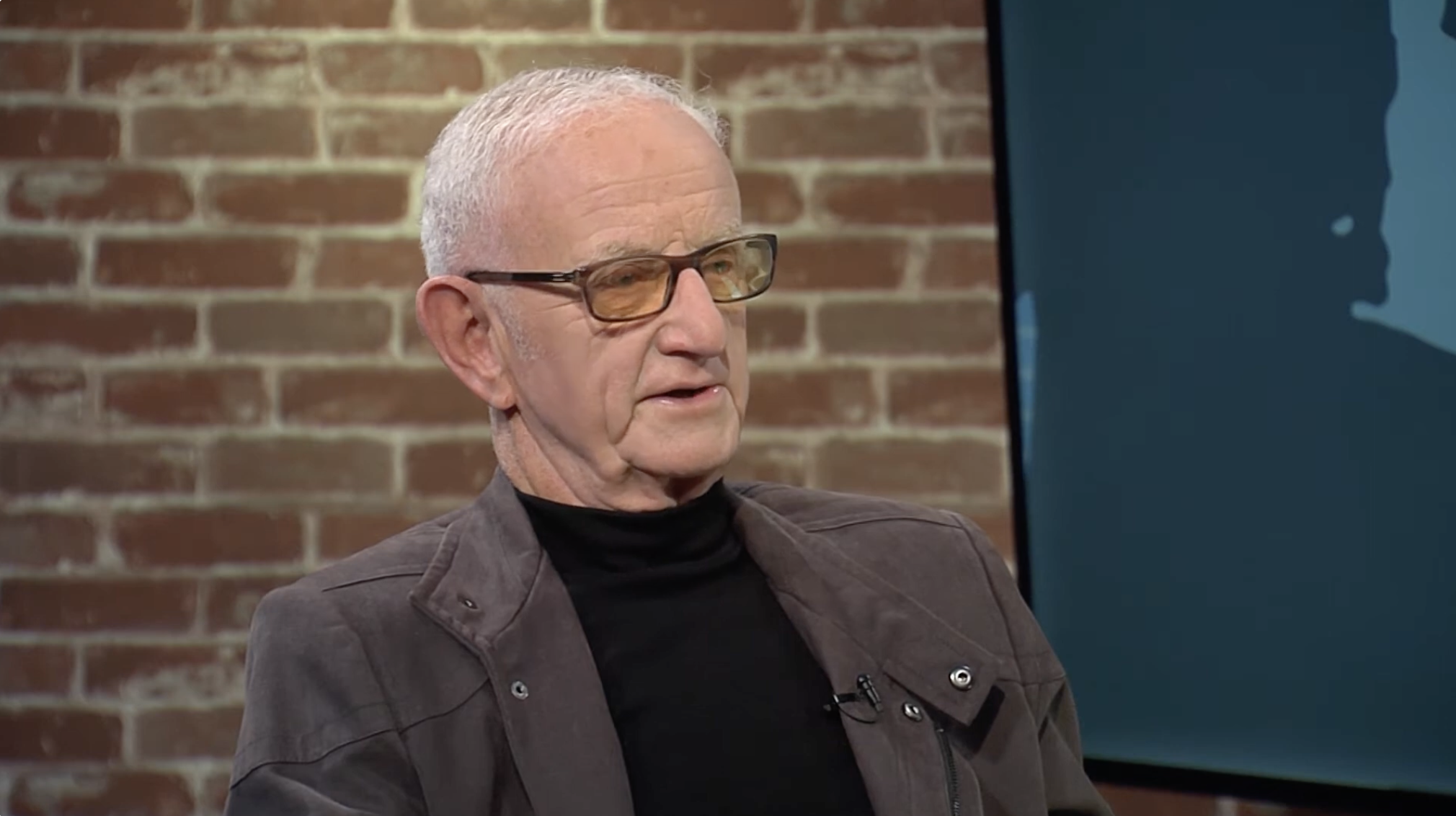
Hanka Pressburg (née Švarc) QSM
Born: Rakovník, Czechoslovakia, 1920
Passed: Wellington, New Zealand, 2011, aged 91
Experience: Survivor of the Terezín ghetto/concentration camp, Auschwitz-Birkenau, Christianstadt Labour Camp, and Bergen-Belsen.
Summary: Following the Nazi invasion of Czechoslovakia, Hanka’s family faced severe antisemitic restrictions under the Nuremberg Laws. In 1941, she married her first husband, Fricek (Frederick) Weil. In 1942, Hanka, Fricek, and members of her family were deported together to the Terezín (Theresienstadt) ghetto/transit camp. In December 1943, Hanka and Fricek were put into cattle cars and transported to Auschwitz-Birkenau. Whilst Hanka survived selection, forced labour, and death marches before being liberated at Bergen-Belsen (April 1945), Fricek, and Hanka’s mother, father and brother all perished in Auschwitz.
The New Zealand connection: Hanka married George (Jiří) Pressburg, a Holocaust survivor also from Czechoslovakia, in 1947, and together they immigrated to New Zealand in 1949. Settling in Wellington, she worked as a seamstress and a dressmaker, quietly building a new life and raising a family. In the early 1990s, Hanka and George began sharing their testimony publicly, speaking to thousands of schoolchildren and community groups about tolerance, resilience, and the dangers of hatred. Together with other survivors, Hanka and George helped lay the foundations for what became the Holocaust Centre of New Zealand.
Experience of becoming a refugee
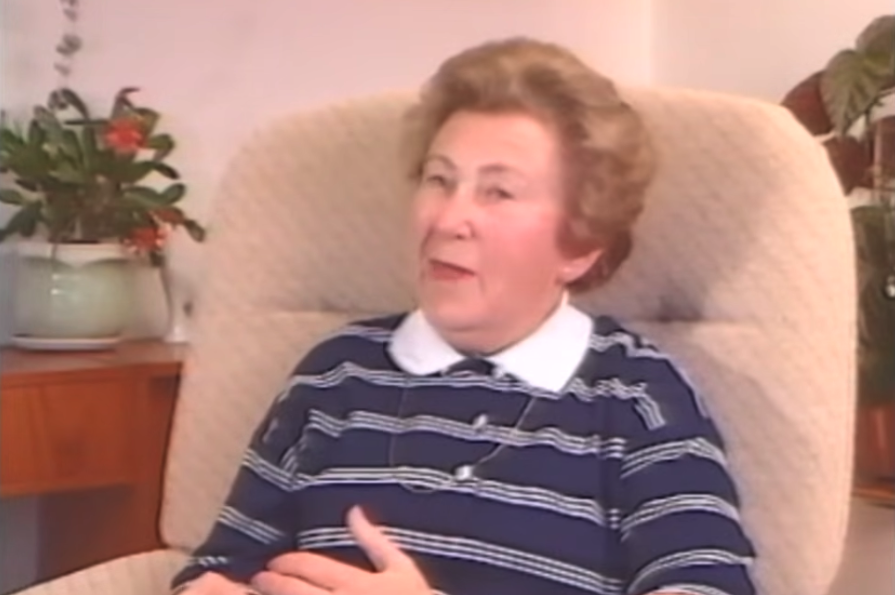
Inge Woolf (née Ponger) QSO
Born: Vienna, Austria, 1934
Passed: Wellington, New Zealand, 2021, aged 86
Experience: Child refugee who fled Nazi-occupied Austria and Czechoslovakia.
Summary: Inge was just four years old when she watched her neighbours in Vienna hang swastika flags from their windows to welcome the German army in 1938. Overnight, her family's prosperous life vanished as their business was looted and legal theft began. Her father, sensing the coming catastrophe, immediately moved the family to Prague. When the Nazis invaded Czechoslovakia a year later, the family escaped once again, posing as tourists on a flight to England – a journey Inge remembered as a blur of military uniforms and hidden fear.
The New Zealand connection: Inge moved to New Zealand in 1957, following relatives who had spoken of it as a good country. Alongside her husband Ronald, she built the iconic Woolf Photography studio in Wellington, becoming a prominent figure in the local business and civic community. In her later years, Inge dedicated her life to ensuring New Zealanders never forgot the lessons of the Holocaust. As the Founding Director of the Holocaust Centre of New Zealand, she spoke to thousands of students, teaching them that hate starts small and challenging them to be upstanders rather than bystanders. Her memoir, Resilience, was published posthumously to continue her mission of promoting tolerance and diversity in New Zealand.
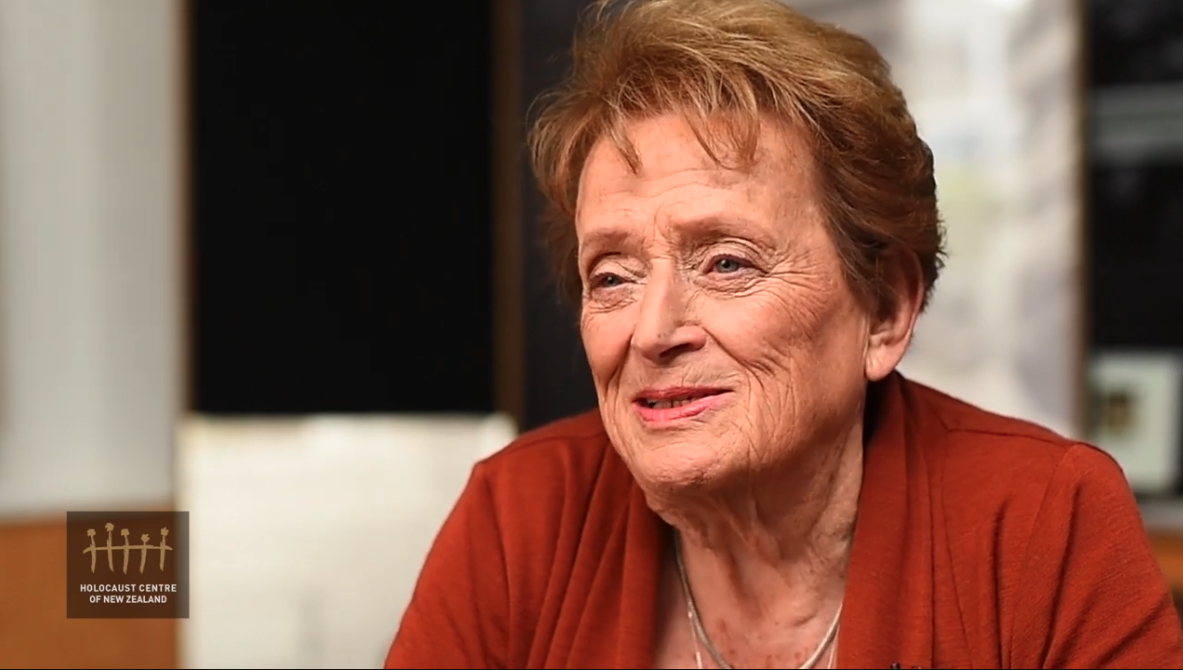
Memoirs of resilience
The following summaries are based on written testimonies and personal memoirs, documenting the firsthand experiences of survivors who came to live in Aotearoa New Zealand, along with witness testimonies of two Kiwi Servicemen.
Hidden child experience
Marie Blaschke (nee Vandewart)
Born: Berlin, Germany 1911
Passed: Auckland, New Zealand 2006, aged 95
Experience: Fled Nazi Germany in 1939 as a refugee; lost her parents in the Holocaust.
Summary: Marie was a highly gifted, conservatory-trained cellist in Berlin whose career was cut short when the Nazi regime banned Jewish musicians from mainstream orchestras. After her father's brief imprisonment in Sachsenhausen, she and her sisters secured exit visas, fleeing to England before Marie journeyed alone to New Zealand in July 1939. Tragically, she received news through the Red Cross in 1941 that her parents had been murdered in the Holocaust. Despite this immense grief, she persevered, reuniting with and marrying her partner Alfons after the war.
The New Zealand connection: Settling permanently in New Zealand, Marie became a foundational pillar of the country's classical music scene. She was a principal cellist for the Alex Lindsay String Orchestra, a member of the prominent Francis Rosner Quartet, and a foundation staff member at the Auckland University Music School, where she taught for 15 years. Her legacy lives on through the generations of New Zealand cellists she mentored and her groundbreaking early recordings of the Bach cello suites.
Used professional skills and business connections to flee
Frank and Alice (nee Loewy) Briess
Born: Frank (Olomouc, Czechoslovakia, 1907); Alice (Vienna, Austria, 1912)
Passed: Frank - Auckland, New Zealand, 1979, aged 71; Alice - Auckland, New Zealand, 1986, aged 73.
Experience: Refugees who escaped Czechoslovakia just before the Nazi invasion in 1939.
Summary: Fleeing Czechoslovakia in March 1939 just hours before Hitler’s army marched in, Frank and Alice (Lizzie) Briess embarked on an extraordinary journey to the furthest corner of the globe to escape the impending horrors of World War II. Through a vibrant collection of translated letters kept between 1939 and 1944, their account captures the quiet agony of leaving loved ones behind, most of whom would tragically perish in the Holocaust, alongside the irrepressible humour, warmth, and grit it took to start over from scratch. It is a deeply moving, intimate story of resilience, love, and light.
The New Zealand connection: Arriving in Auckland in 1939, Frank and Alice threw themselves into Kiwi life, first tackling a 42-acre farm in Massey with zero experience, and embracing the classic "She'll be right" attitude. From running the popular 'Centreway' restaurant on Queen Street during the war and opening butcher shops on Karangahape Road, to skiing Mt. Ruapehu long before chairlifts existed and transcribing Braille for the blind, their journey is a heartwarming tale of refugees building a rich, vibrant home in New Zealand. Their daughter Claire Bruell has honoured their legacy with decades dedicated to Holocaust education.
Entrepreneurial refugee to New Zealand
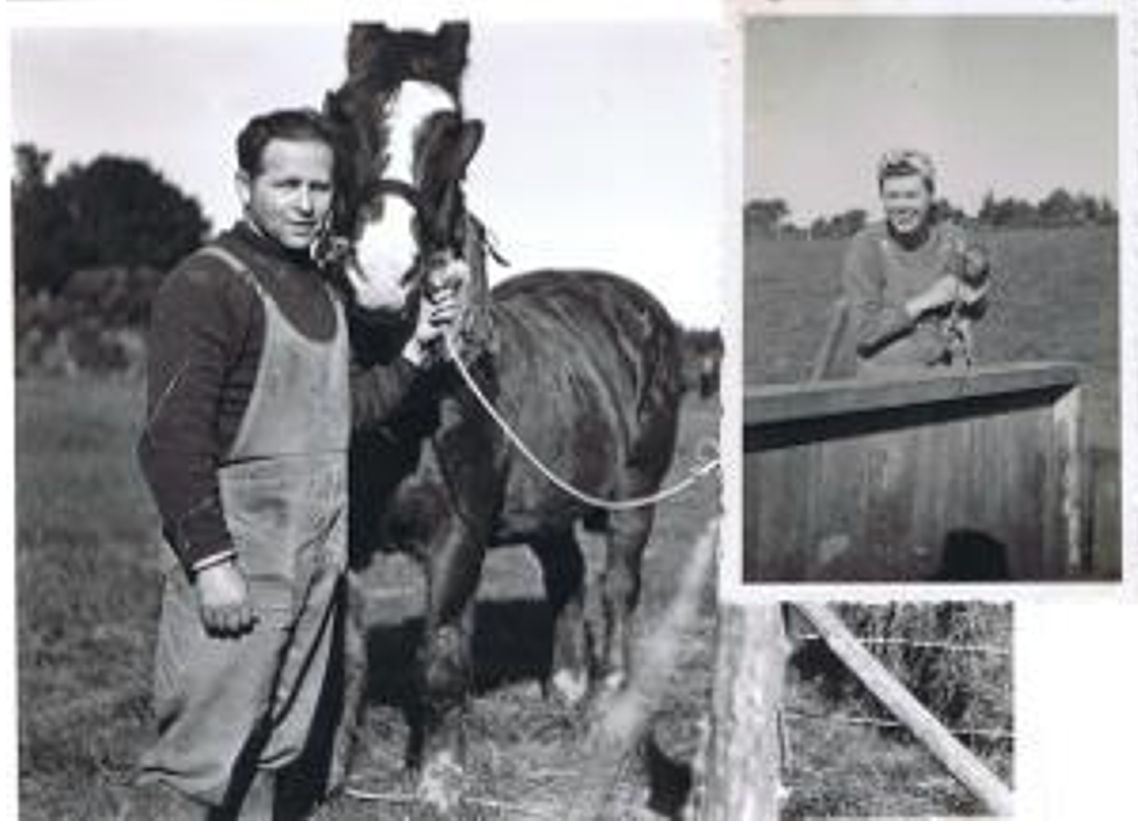
Eugene Hirst (born Eugen Hirschfeld)
Born: Podersam, Czechoslovakia 1911
Passed: Auckland, New Zealand 1989, aged 78
Experience: Refugee who escaped the Nazi annexation of the Sudetenland.
Summary: Eugene was a skilled technician working in the optical industry in the Sudetenland. Following the Munich Agreement in 1938, which saw his home region ceded to Nazi Germany, Eugene realised that as a Jew, his life and career were in immediate danger. He managed to escape to Prague and eventually secured a permit to leave for New Zealand just as the window for escape was closing. While Eugene found safety, his written testimony (compiled by his daughter, Yvonne) reflects the heartbreak of leaving behind his parents, who were later murdered in the Holocaust.
The New Zealand connection: Arriving in 1939 with very little, Eugene settled in Auckland and revolutionized the local optical industry. He founded Hirst Contact Lenses, becoming a pioneer in the manufacturing of contact lenses in New Zealand and the Pacific. His story is a testament to the resilience of the 1939 refugees from Nazi oppression, individuals who were initially viewed with suspicion as an enemy alien but who went on to make massive scientific and economic contributions to New Zealand society.
A sanctuary won, a family lost
Hans Johnson (born Hans Jottkowitz)
Born: Berlin, Germany, 1918
Passed: Auckland, New Zealand 2002, aged 83
Experience: Jewish-German survivor and forced labourer in the Organisation Todt.
Summary: In late 1938, young Hans Johnson (originally Jottkowitz) escaped the rising terror of Nazi Germany just as widespread anti-Jewish violence erupted across Europe. After passing a nerve-wracking Gestapo inspection in Berlin, he embarked on an arduous journey by air, sea, and rail through England and Canada to reach safety half a world away. While Hans succeeded in building a new life in freedom, his sanctuary was forever shadowed by tragedy; despite desperate attempts to secure visas for his parents, they remained trapped under Nazi rule and ultimately perished in Auschwitz. Written near the end of his life, his account is a poignant testament to survival, sacrifice, and memory.
The New Zealand connection: During the late 1930s, New Zealand enforced strict entry restrictions on refugees fleeing Nazi persecution, permitting less than 1,500 Jewish migrants to enter the country. Hans was among this small group, stepping ashore in Auckland in December 1938 before settling in Wellington. Decades later, his written story was preserved by his daughter Naomi in Auckland, offering a rare and vital piece of local Jewish history that links the global tragedy of the Holocaust directly to New Zealand. Naomi continues to foster Holocaust memory as the co-leader of the Auckland second generation group.
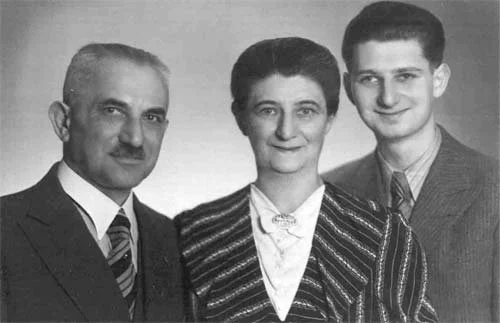
Remembering Verdi’s “Requiem” in Terezin
Frank Monk (born Franz Münz)
Born: Vienna, Austria, 1926
Passed: Auckland, New Zealand, 1993, aged 81
Experience: Interned in the Terezin (German: Theresienstadt) Ghetto/Concentration Camp/Transit Camp.
Summary: Frank was interned in Terezin, but little is known of his history because he refused to talk about his experiences there other than his remembrance, from 1944, of a brilliant performance of Verdi’s “Requiem” by the camp’s inmates. It was such a stunning performance, even acknowledged by the camp commandants, who promised to keep the members of the choir together – they went as a group on the wagons that took them to the gas chambers of Auschwitz.
The New Zealand connection: Frank and his wife Rachel (another survivor, who became a respected Auckland general practitioner and who also provided low-cost medical service to the Tainui people) had an intense love and knowledge of music which they brought with them to New Zealand, where they held musical salons in the Auckland home.
Witness as Kiwi servicemen
John Parfitt
Born: Christchurch, New Zealand, 1915
Passed: Hokitika, New Zealand, 2001, aged 85
Experience: New Zealand soldier and witness to the liberation of Bergen-Belsen.
Summary: John Parfitt was a young New Zealander serving with the British 11th Armoured Division during World War II. In April 1945, his unit was among the first to enter the Bergen-Belsen concentration camp. John’s written testimony provides a harrowing, firsthand account of the "indescribable" conditions found at the camp – the extreme starvation, the piles of unburied bodies, and the skeletal state of the survivors. His role involved the grim but essential task of overseeing the burial of the dead and attempting to provide basic food and water to those still clinging to life.
The New Zealand connection: After the war, John returned to New Zealand, carrying the heavy psychological weight of what he had witnessed. For many decades, he remained silent about his experiences, but he eventually felt a duty to record his testimony so that future generations of New Zealanders would understand the reality of Nazi atrocities. His account serves as a crucial piece of New Zealand’s military and Holocaust history, reminding us that New Zealanders were not just distant observers, but were among the very first to see and document the evidence of the Holocaust.
Tahu Pōtiki Hopkinson
Born: Tuahiwi, New Zealand, 1925
Passed: Kaiapoi, New Zealand, 2013, aged 88
Experience: 28th Māori Battalion soldier and liberator of Risiera di San Sabba.
Summary: Private Tahu Pōtiki Hopkinson was a member of the legendary 28th Māori Battalion and served in D Company’s 18 Platoon during World War II. In May 1945, his unit was part of the Allied contingent that liberated Risiera di San Sabba, a Nazi concentration camp in Trieste, northern Italy. His heartbreaking account documents the profound trauma of what he and his fellow soldiers discovered at the camp. Deeply moved by the tragedy, Tahu noted the striking similarities between Jewish customs and Māori culture, leaving him and his comrades wishing they could have done more to comfort the grieving survivors and honour the dead.
The New Zealand connection: After returning home, Tahu married, raised a family, and became a devoted father. Like many veterans, he rarely spoke of his personal experiences of the war, carrying the heavy emotional weight of the horrors he witnessed for decades. He eventually recorded his testimony, providing an invaluable indigenous New Zealand perspective on the liberation of Europe. His story emphasises that Kiwi soldiers from all backgrounds were eyewitnesses to the Holocaust, bridging a deep cultural connection between Māori and the global history of the Second World War.
Underground life – false papers
Max Rosenfeld
Born: Prague, Czechoslovakia, 1905
Passed: Auckland, New Zealand 1989, aged 86
Experience: Survivor of the Nazi occupation of Belgium; he lived in hiding with a false identity.
Summary: Born in Czechoslovakia, qualified architect Max Rosenfeld faced immediate peril as a Jewish man following the Nazi annexation of his homeland. Desperate to escape occupied Prague, he reached out to British politician Clement Attlee, who helped secure a New Zealand visa. Through a miraculous stroke of luck, a former student of Max’s wife, serving as Deputy Chief of Police, granted their exit visas; Max, Marta, and their young daughter fled Europe, landing in Wellington in August 1939 just days before World War II began. Though they found safety, the family members Max left behind tragically perished in the Holocaust.
The New Zealand connection: Settling in Auckland, Max transformed his early struggles to find a rental into a life-long mission to revolutionise Kiwi homes. Over a 23-year career with the Ministry of Works and a legendary 22-year run authoring a home design feature for The Weekly News, he reshaped domestic architecture across the country. Max introduced groundbreaking concepts now taken for granted, such as sun-oriented living, hygienic layout designs, concrete floors, and prefabricated roof trusses. His best-selling book The New Zealand House went through 13 editions, leaving an indelible mark on how New Zealanders live today.
Survivor of the Budapest Ghetto
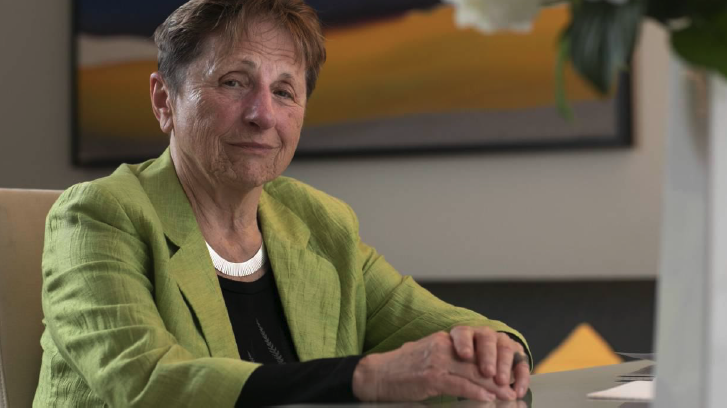
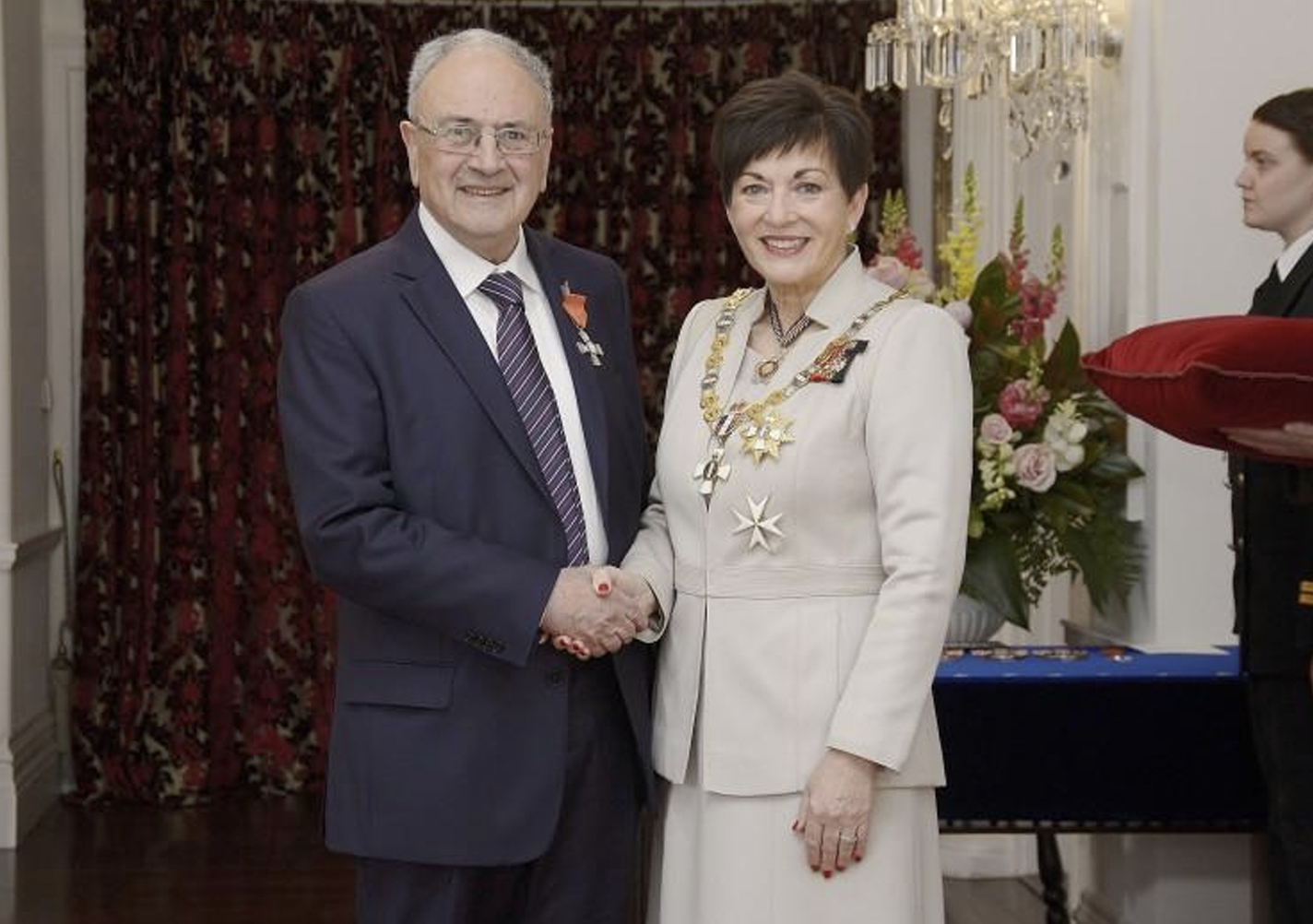
Steven Sedley MNZM
Born: Budapest, Hungary 1933
Experience: Child survivor of the Budapest Ghetto and the Siege of Budapest.
Summary: Steven was only ten years old when the Nazi occupation of Hungary began in 1944. His written testimony provides a vivid child's-eye view of the rapid escalation of persecution – from the sudden requirement to wear the Yellow Star to the forced relocation into the International Ghetto. He recounts the terrifying period under the Arrow Cross (Hungarian fascists), where he witnessed the brutality of the Siege of Budapest and the constant threat of being taken to the banks of the Danube. Steven’s survival was a result of his mother’s incredible resourcefulness and the chaotic liberation of the city by the Soviet Army in early 1945.
The New Zealand connection: Steven immigrated to New Zealand in 1950, seeking a life of safety and opportunity. He became a highly respected educator and a significant figure in the New Zealand Jewish community. Steven was a passionate advocate for Holocaust remembrance and played a key role in the establishment of the Holocaust Centre of New Zealand, and was the Founding Chair. His testimony is particularly valued for its intellectual depth, as he often reflected on the nature of memory, the ethics of survival, and the responsibility of the witness to speak for those who did not survive.
Fate of the European family
Martin, Margarete and Lane Unger
Born: Berlin, Germany (Martin: 1891, Margarete: 1902, Lane: 1942)
Passed: Auschwitz, Germany, 1944
Experience: Perished at Auschwitz-Birkenau concentration and extermination camp.
Summary: Martin Unger was a decorated German World War I veteran and a Persian carpet importer living a comfortable, integrated life in Berlin with his wife Margarete and their young daughters. Following the rise of the Nazi regime and escalating persecution, Martin’s brother, Dr. Bruno Unger, managed to flee to New Zealand with his immediate family in 1937. Martin remained behind, and in 1943, the family was arrested and deported to the Theresienstadt transit camp. In the autumn of 1944, the family was split and sent via the ‘Autumn Transports’ to Auschwitz, where Martin, Margarete, and their two-and-a-half-year-old daughter Lane tragically perished. Their eldest daughter, Evelyne, was separated on arrival and survived a Russian POW camp, but was permanently lost in the post-war turmoil of Europe despite a desperate 50-year search by her Kiwi relatives.
The New Zealand connection: The surviving branch of the Unger family successfully established new lives in New Zealand in 1937. For over 70 years, the New Zealand descendants painstakingly pieced together fragmented records from the International Tracing Service and Yad Vashem to uncover the fate of the family members they left behind. Their tragic account provides a direct, localized link to the wider tragedy of the Final Solution, highlighting that the legacy of the Holocaust is carried today by Kiwi families who bear the permanent weight of lost generations.
One of Germany’s most famous poets and scholars – hidden treasure in NZ
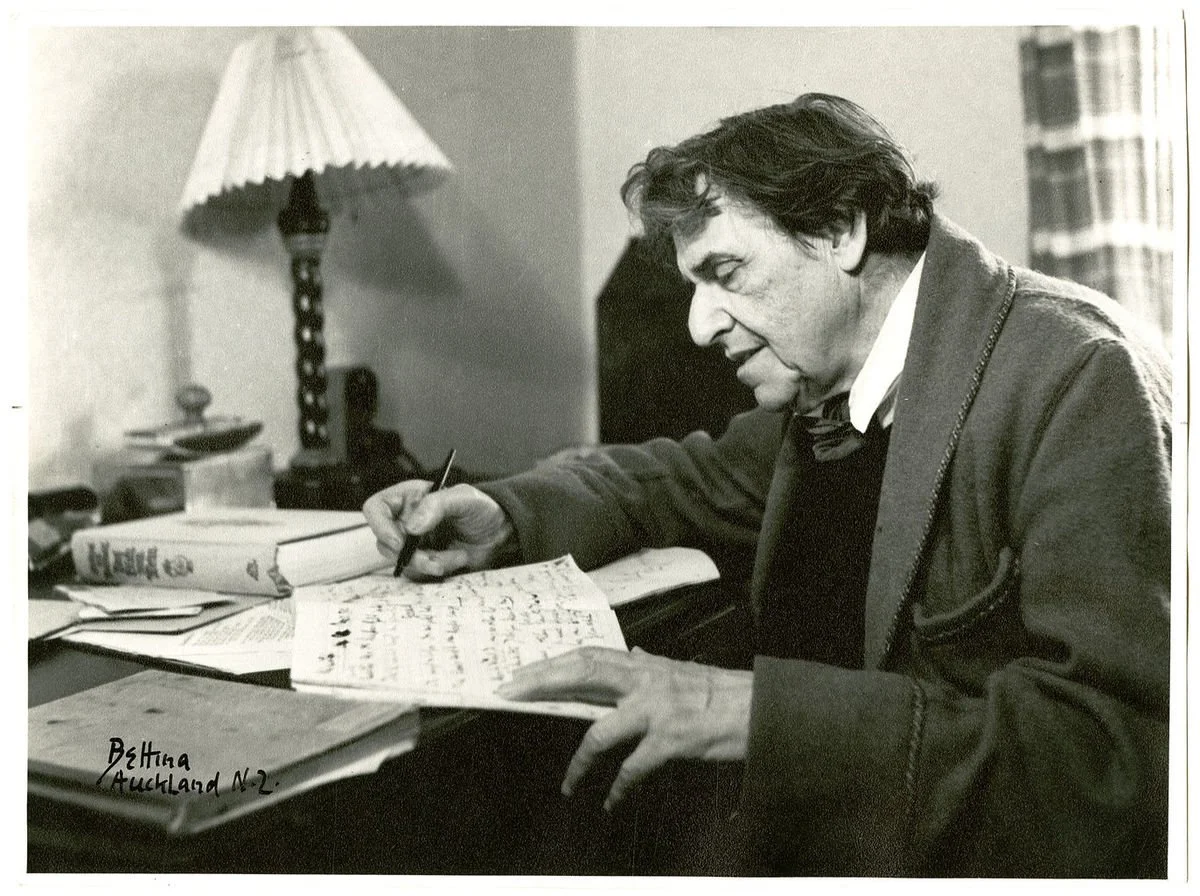
Karl Wolfskehl
Born: Darmstadt, Germany 1869
Passed: Auckland, New Zealand 1948, aged 79
Experience: Intellectual exile and refugee; fled Nazi Germany in 1933.
Summary: Karl Wolfskehl was a giant of German literature and a central figure in the famous George Circle of poets. When the Nazis came to power in 1933, Karl, a patriotic German, who was also Jewish, realised immediately that the new regime had no place for him. He fled first to Switzerland and Italy, but as the shadow of Nazism spread across Europe, he sought the most distant refuge possible. His written testimony and letters describe the intellectual death of leaving behind his library, his language, and his culture, describing himself as a wanderer in a world that had turned against him.
The New Zealand connection: Karl arrived in Auckland in 1938 at the age of 69. Almost blind and living in relative poverty, he spent the final ten years of his life in New Zealand. Despite the isolation, he continued to write profound poetry in German, often reflecting on his Exul (exile) status. He became a close friend of New Zealand poets like Frank Sargeson and A.R.D. Fairburn, who recognised his immense stature. Today, he is buried in Waikemete Cemetery in Auckland; his presence remains a powerful reminder of the global loss of culture caused by the Holocaust and the sanctuary that New Zealand provided to those fleeing intellectual persecution.
Concentration camp survivor – a cautionary tale about fascism
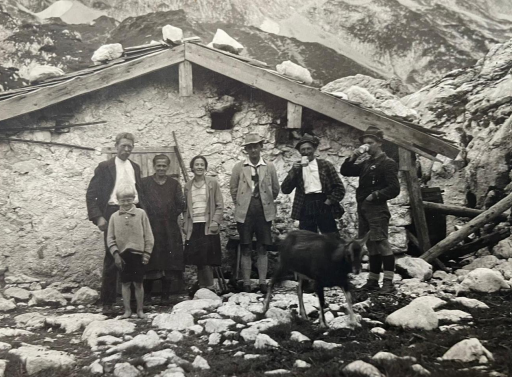
Magdalena Pernthaner
Born: Abtenau, Salzburg province, Austria, 1894
Passed: Abtenau, 1978
Experience: Denounced by a neighbour, sent to a concentration camp, rescued by her daughter.
Summary: Magdalena Pernthaner was a Roman Catholic farmer in the Austrian alps who managed her small farm after the death of her husband in 1936. After the Anschluß (annexation of Austria by Nazi Germany), fascism swept Austria and, even in remote Abtenau, people began to ‘disappear’. In 1941, Magdalena was denounced by her neighbour, who was also her cousin, tried by a “people’s court” and sent to a concentration camp. Magdalena was rescued in astonishing circumstances by her daughter Katharina. Magdalena’s story is not meant to diminish Jewish and other suffering in the Holocaust but has been offered as a cautionary tale about what can happen in a fascist society.
The New Zealand connection: Magdalena’s grandson, Dr Anton Pernthaner, has lived in New Zealand since 1997.
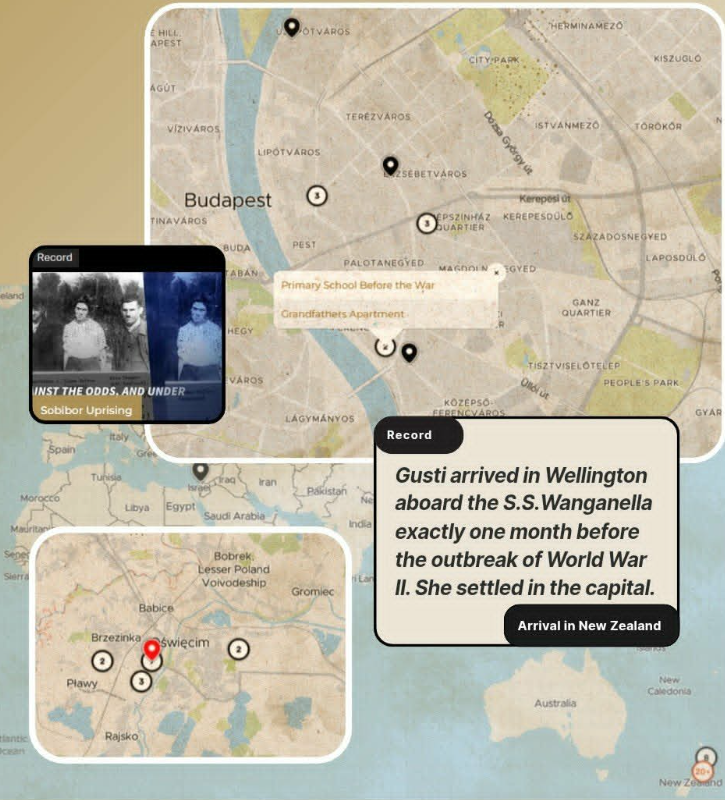
Mapping Holocaust survivors and their legacies in New Zealand
The Legacies Project is an interactive digital archive that traces the journeys of Holocaust survivors and refugees who rebuilt their lives in New Zealand.
This powerful initiative maps personal histories, honouring those who survived and remembering those who perished.
Through detailed biographies, first-hand narratives, historical documents, photos and artefacts we illuminate the resilience and contributions of survivors to New Zealand.