Exhibitions and memorials
Our exhibitions serve as powerful visual narratives, bringing the history of the Holocaust into the present day. Whether you visit us in Wellington or engage with our touring collections, these curated experiences provide essential context for students and educators alike.
The Anne Frank Memorial (Wellington)
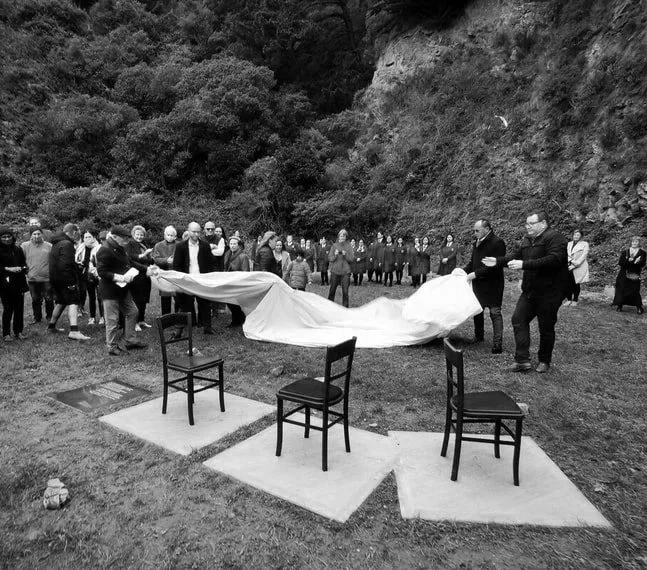
The Anne Frank Memorial (Anne Frank Memorial Parikōwhai) in Wellington is a permanent space of remembrance and reflection, offering a vital local connection to Anne’s story and the universal human rights she symbolises. The essence of the memorial is captured in Matthijs Siljee’s poignant design: three chairs set in a deliberate arrangement. Two chairs face one another, representing dialogue and connection, while a third chair faces away - a powerful, silent symbol of the excluded.This dedicated environment provides a profound space for students and the public to contemplate Anne’s legacy of hope. It serves as an essential stop for school groups visiting our Centre, prompting deep reflection on the themes of belonging, prejudice, and our shared responsibility to one another.
Boyd Klap, a driving force behind the NZ-Netherlands Foundation and a former member of the Dutch Resistance, was a key figure in the creation of the memorial. The project was supported by the Embassy of the Kingdom of the Netherlands. Designer Matthijs Siljee from Massey University School of Design, has also spoken of his connection to the impact of the Holocaust on European communities, having grown up in the Netherlands.
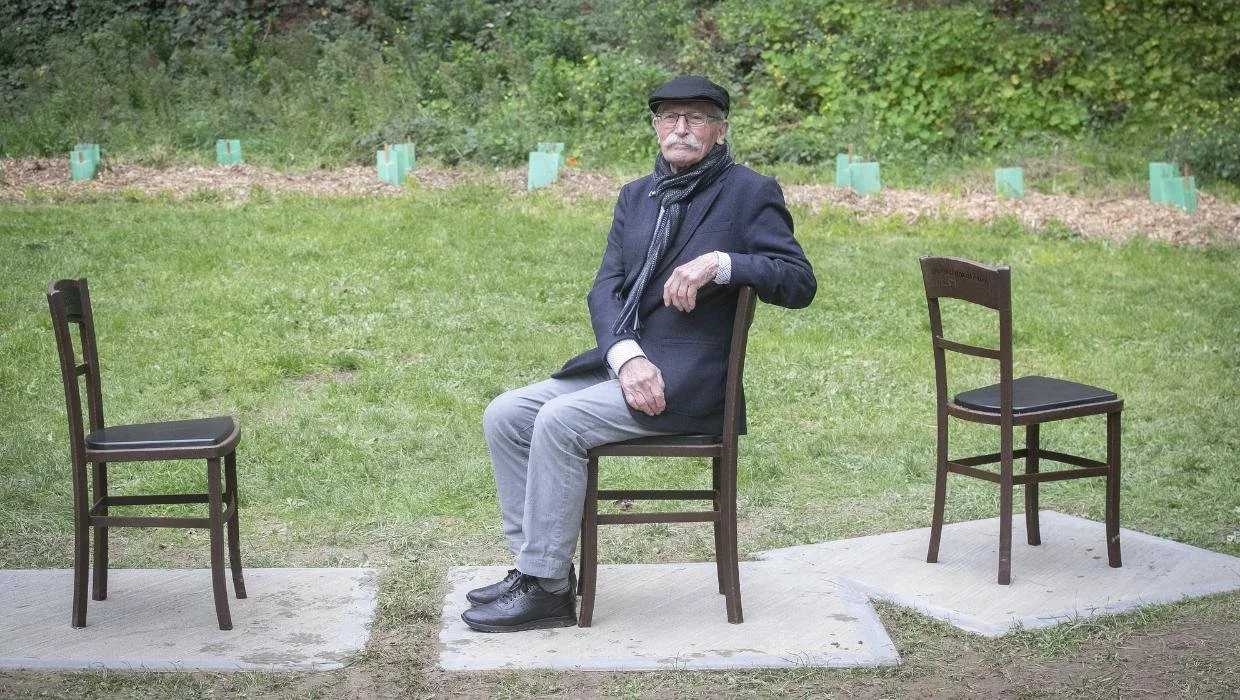
Boyd Klap was a key figure in the memorial’s creation. KEVIN STENT / Stuff
Travelling exhibitions
Over the years, the Holocaust Centre of New Zealand has curated and hosted significant touring exhibitions that have travelled the length of New Zealand. While these are not currently on active display, they remain a core part of our educational archive and reflect our commitment to bringing Holocaust history to local communities.
If you are interested in hosting a travelling exhibition at your school or in your town in the future, please contact us to discuss logistics and availability.
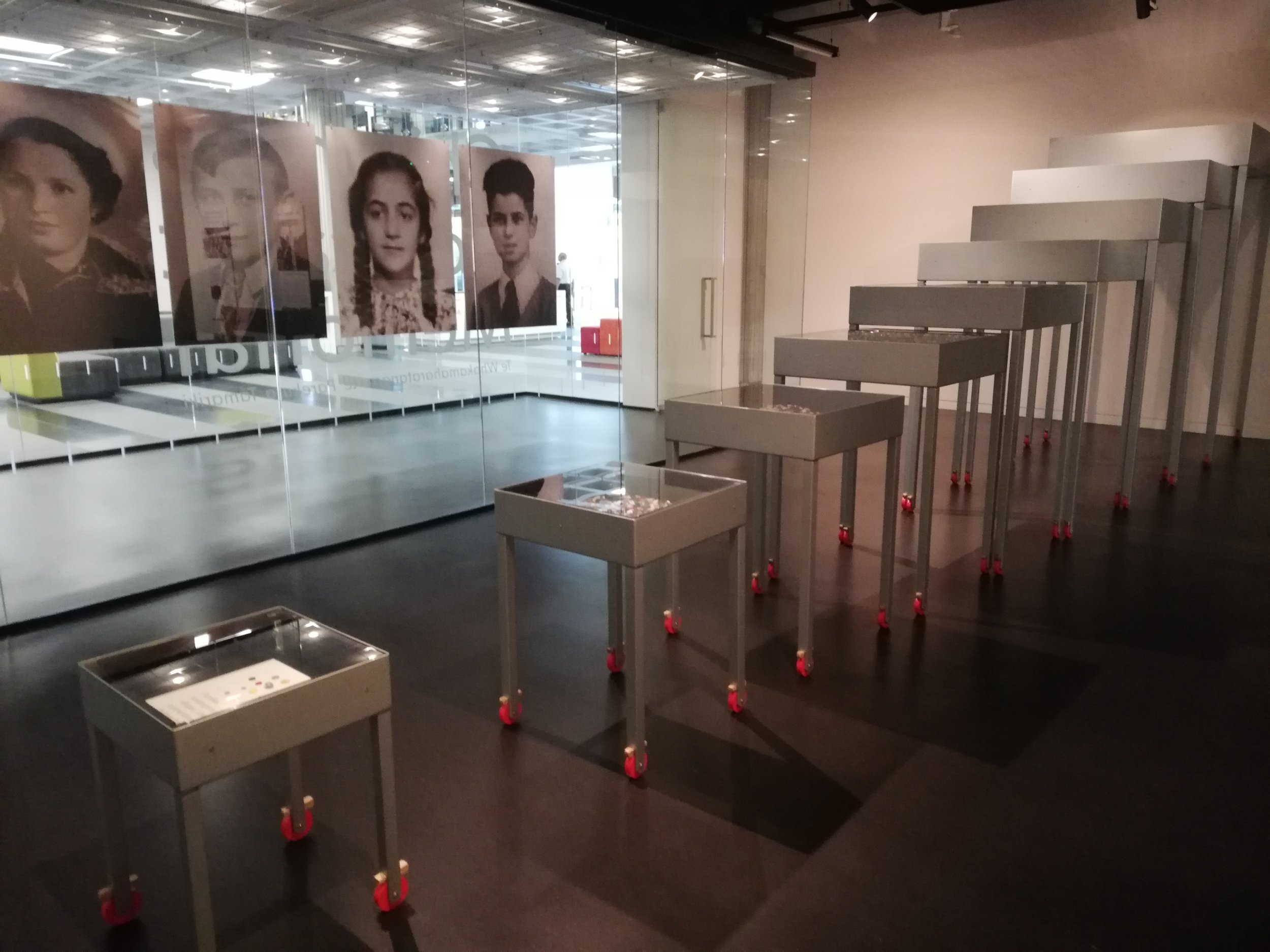
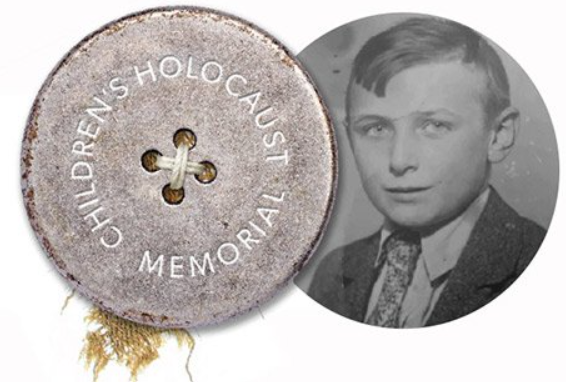
The Children’s Holocaust Memorial & exhibition: A memorial dedicated to the 1.5 million children killed in the Holocaust, featuring 1.5 million buttons collected by the children of Moriah Jewish Day School (also known as Moriah College, est.1985, closed 2012) , between 2008 and 2010.
The memorial comes with accompanying exhibition panels and portraits and stories of child victims of the Holocaust with family connections in New Zealand. Launched in November 2018 at the National Library in Wellington before travelling the country over numerous years.
If your organisation is interested in hosting the memorial, please contact Tom Rockman Arielly at projectmanager@holocaustcentre.org.nz.
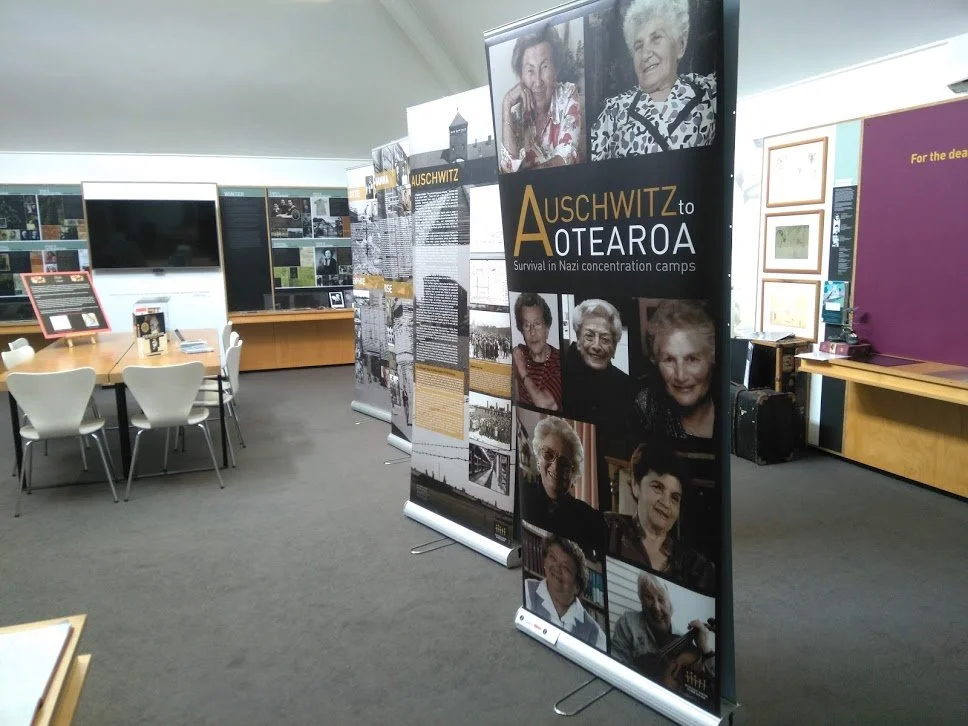
Auschwitz to Aotearoa: Survival in Nazi Concentration Camps (by Dr Simone Gigliotti and Anna Chapman): This exhibition focuses on nine Jewish women from different countries and backgrounds, who share the common bond of surviving Auschwitz and later settling in Aoteroa New Zealand. (pull up banners)
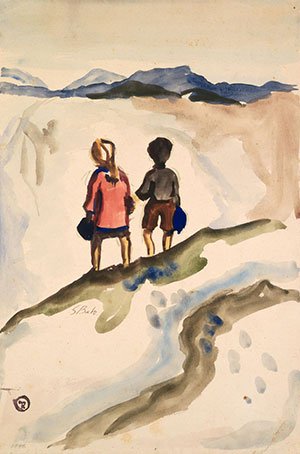
Anguish of Liberation - As Reflected in Art (by Yad Vashem): Featuring artworks and the personal stories behind each, this exhibition looks at how survivors reacted to their liberation through art created between the immediate aftermath of the war and 1947. (11 display boards)
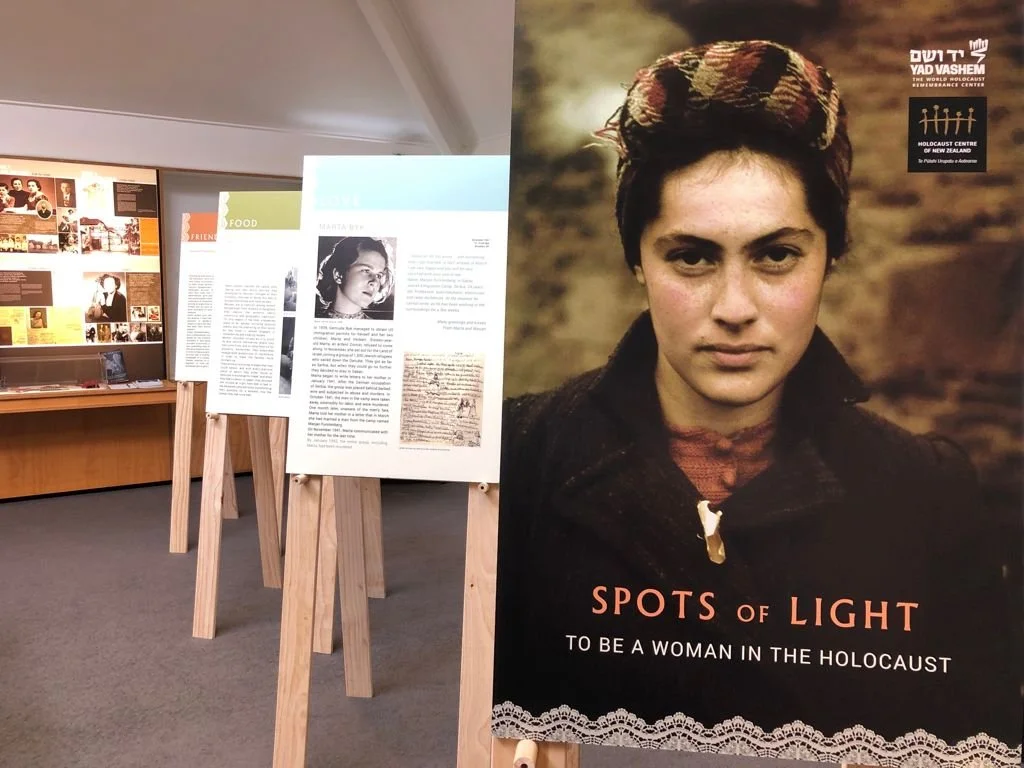
Spots of Light: To be a Woman in the Holocaust (by Yad Vashem): This exhibition gives expression to the unique voice of Jewish women in the Holocaust, exploring their choices, roles, and responses in the face of brutality and relentless hardship. (21 display boards)
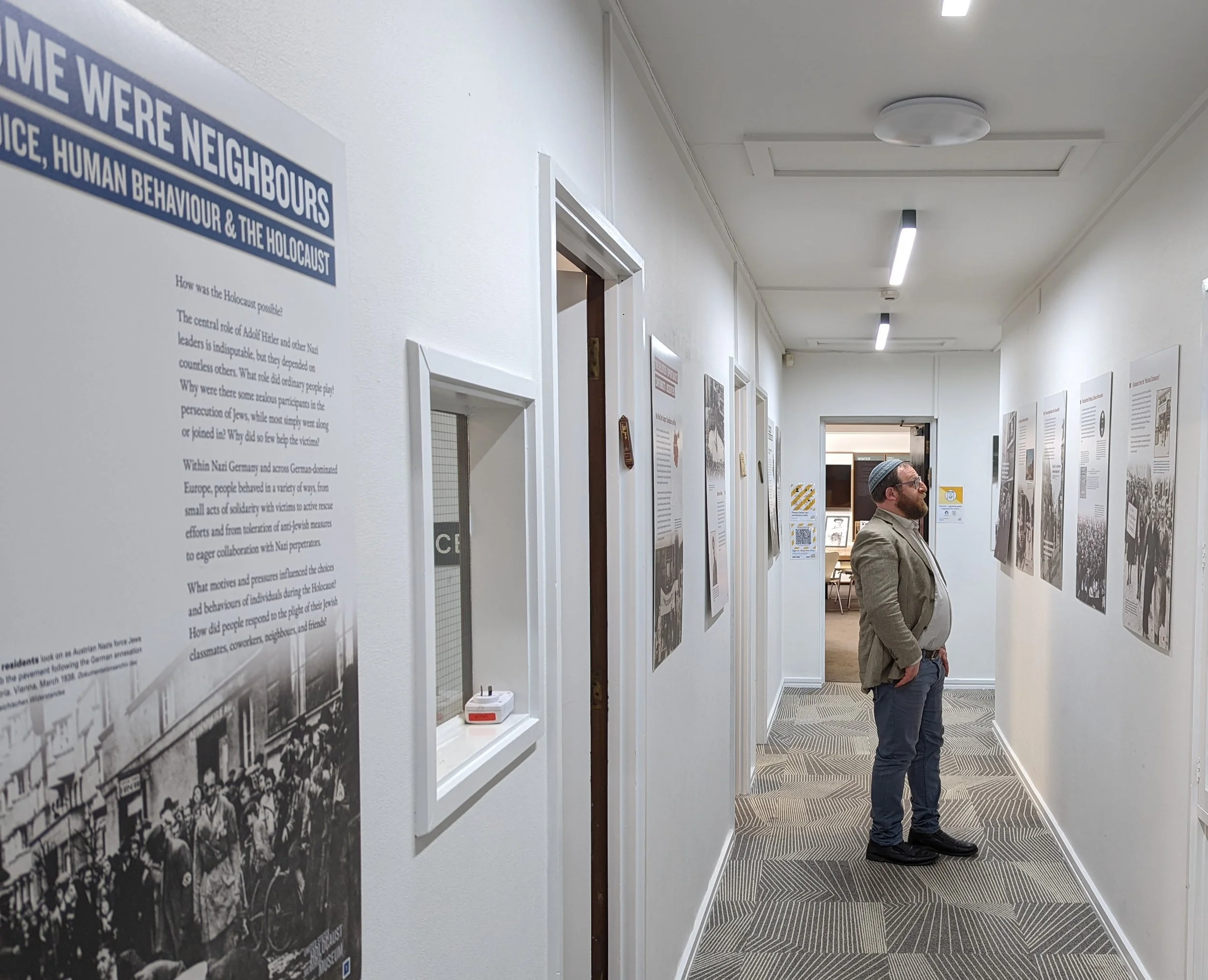
Some Were Neighbors: Collaboration & Complicity in the Holocaust (by United States Holocaust Memorial Museum): This exhibition examines how the execution of Nazi racial policies depended on countless ordinary individuals. It explores the variety of motives and pressures-such as fear, indifference, peer pressure, or material gain-that influenced choices to collaborate, while also highlighting individuals who refused to comply. (22 display boards)
If your organisation is interested in hosting one of the above four portable exhibitions, please contact our team at info@holocaustcentre.org.nz.