
Mission and history
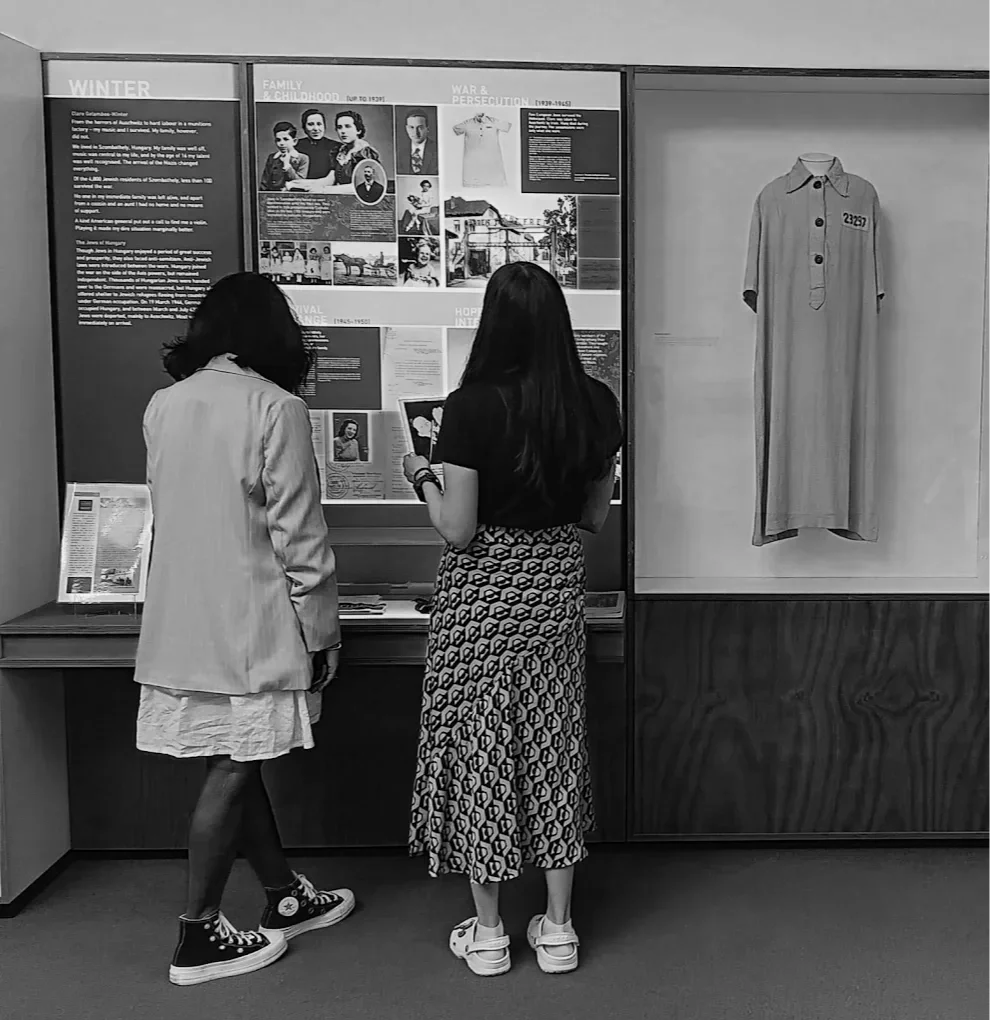
Our mission
The Holocaust Centre of New Zealand inspires and empowers action against antisemitism, discrimination, and apathy by remembering, educating, and bearing witness to the Holocaust.
The Holocaust Centre of New Zealand is the country’s national Holocaust education and remembrance centre.
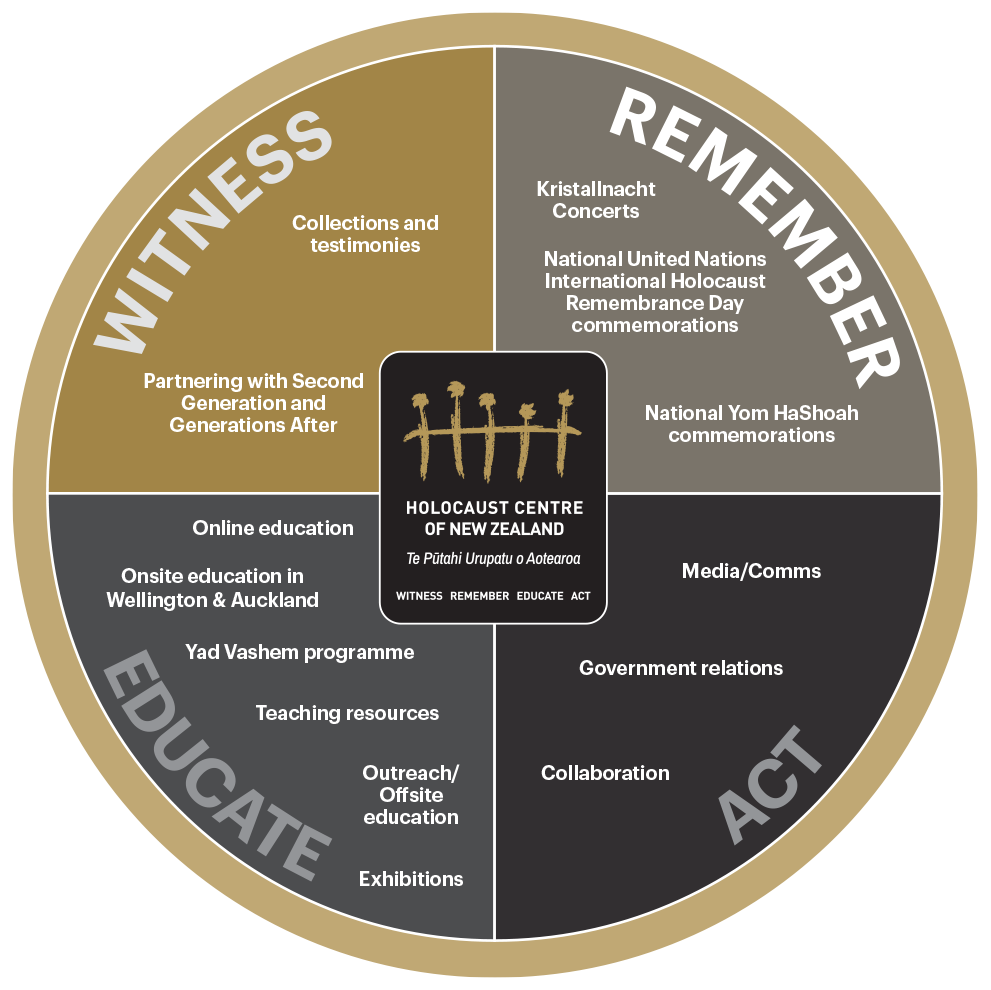
We have four strategic pillars that form the foundation of our work:
Witness
Remember
Educate
Act
Our history
Origins and founders
The Holocaust Centre of New Zealand was established in 2007. It was founded by a dedicated group of Holocaust survivors, children of survivors, and refugees who sought to ensure the lessons of history remained vital and active in contemporary society.
“The Holocaust Centre of New Zealand was founded to honour the survivors who came here, cherish the memories of those who were murdered, and teach the relevance of the Holocaust to New Zealand society.” – Steven Sedley MNZM, Founding Chair
Our work was profoundly inspired by Hanka and George Pressburg z”l, true pioneers of Holocaust education in Aotearoa New Zealand. Around 1990, the Pressburgs created a small display of Holocaust artefacts in the Van Staveren room of the Wellington Jewish Community Centre. There, they spoke directly to students and visitors, sharing Hanka’s first-hand experiences of surviving Theresienstadt, Auschwitz, and forced labour in Hamburg.
Driven to build upon this vital foundation, a committee was coordinated by Steven Sedley MNZM, a Wellington-based survivor of the Budapest Ghetto. The committee held its inaugural meeting on 19 June 2005.
The urgent need for a dedicated, permanent national centre was further highlighted by a troubling rise in local prejudice, specifically the 2004 desecration of the Jewish section of Makara cemetery in Wellington, where nearly 100 headstones were vandalised, and the chapel was torched, following similar damage at the Bolton Street cemetery, also in Wellington.
At the same time, global remembrance was shifting. In 2005, the United Nations General Assembly designated 27 January as International Holocaust Remembrance Day. This milestone was formally acknowledged in New Zealand by Prime Minister Helen Clark, marked by a standing-room-only memorial service at the Wellington Hebrew Congregation’s Beth El synagogue, attended by a vast number of Jewish and non-Jewish citizens.
To turn the vision of a permanent education centre into reality, the founding committee engaged Ken Gorbey CNZM, a renowned museum consultant and former Project Director of the Jewish Museum Berlin. His expertise helped shape the structural philosophy and physical layout of the exhibition space.
Originally named the Wellington Holocaust Research and Education Centre, the space was officially opened on 15 April 2007 by the Governor-General of New Zealand, the Honourable Sir Anand Satyanand, who noted that the Centre would significantly enhance the national understanding of the Holocaust.
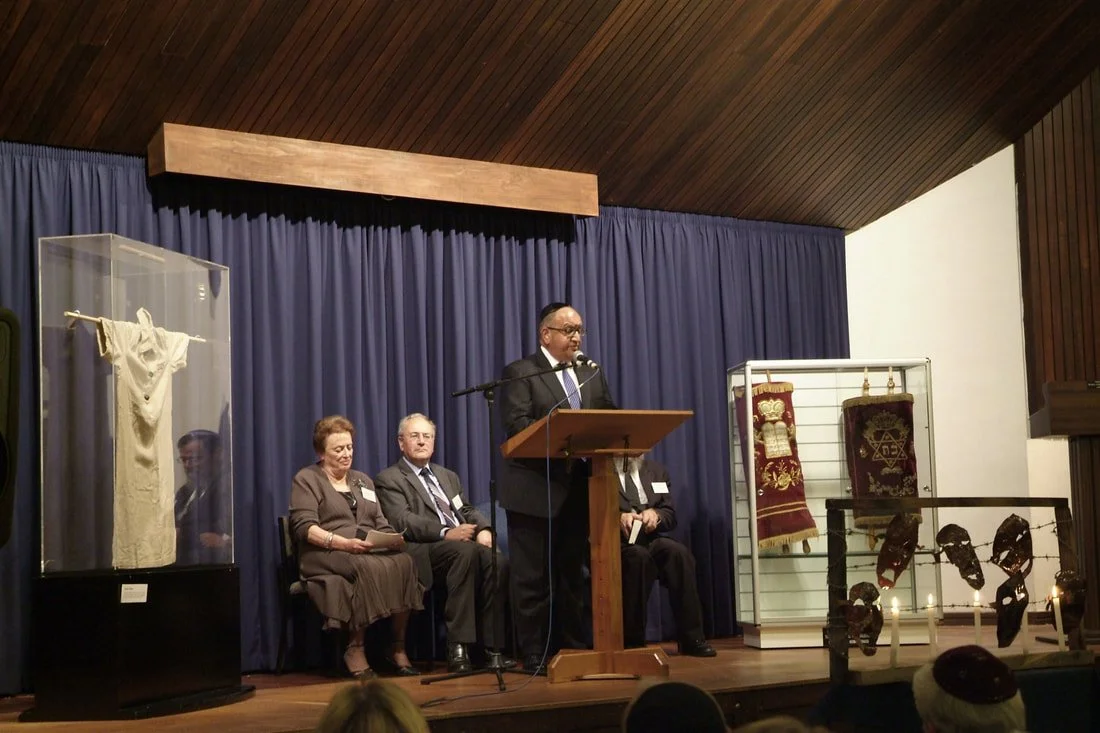
Governor General of New Zealand Hon. Sir Anand Satyanand, HCNZ Founding Director Inge Woolf z"l QSO and HCNZ Founding Chair Steven Sedley MNZM 15/4/2007
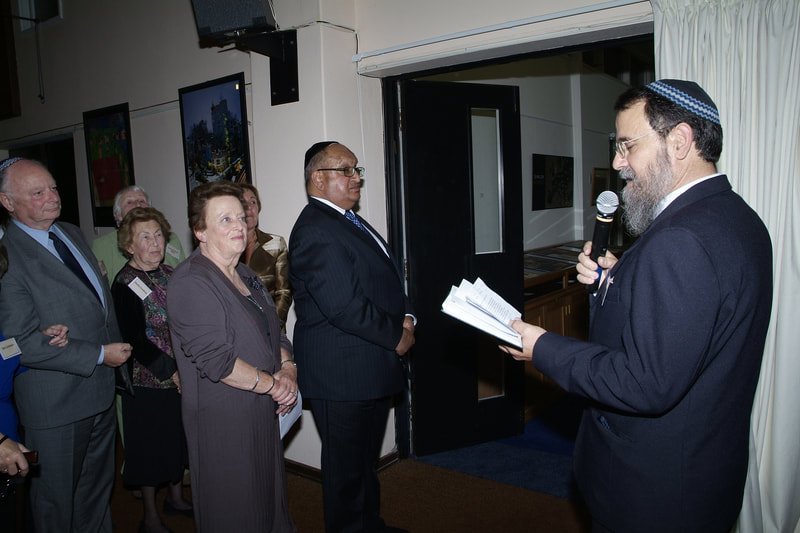
Rabbi Chaim Dovrat says a blessing
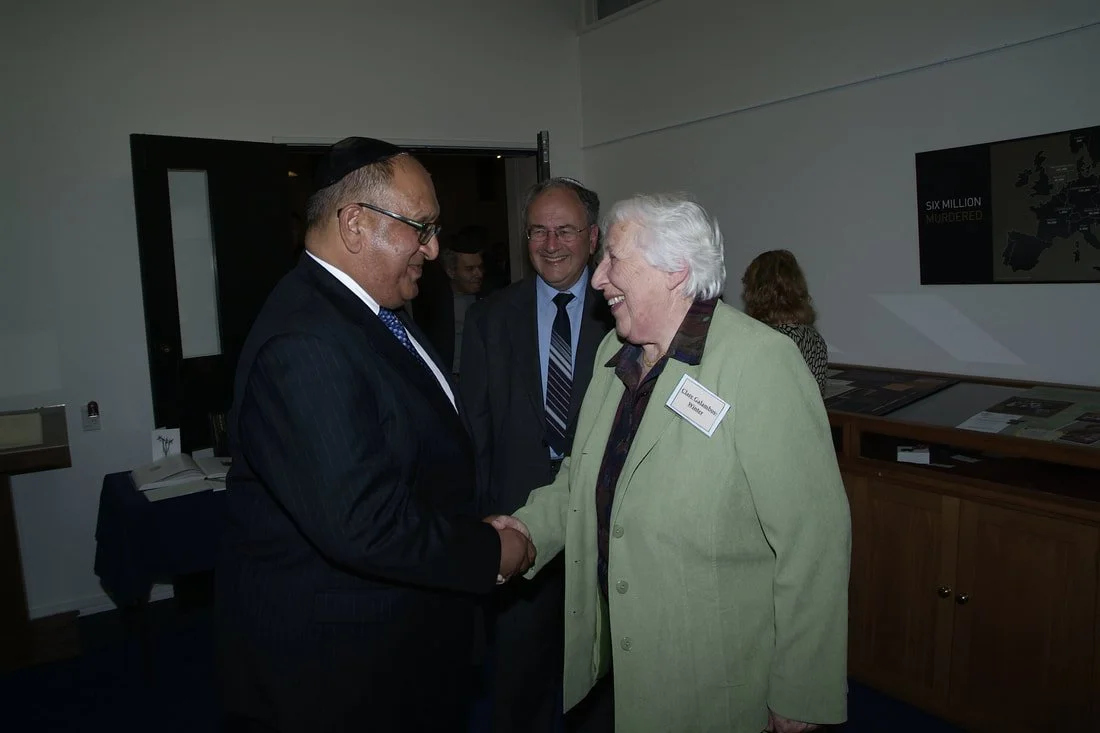
Governor General of New Zealand Hon. Sir Anand Satyanand, with Holocaust survivors Clare Galambos-Winter z"l (Klára Galambos) (1923-2014) and Steven Sedley MNZM
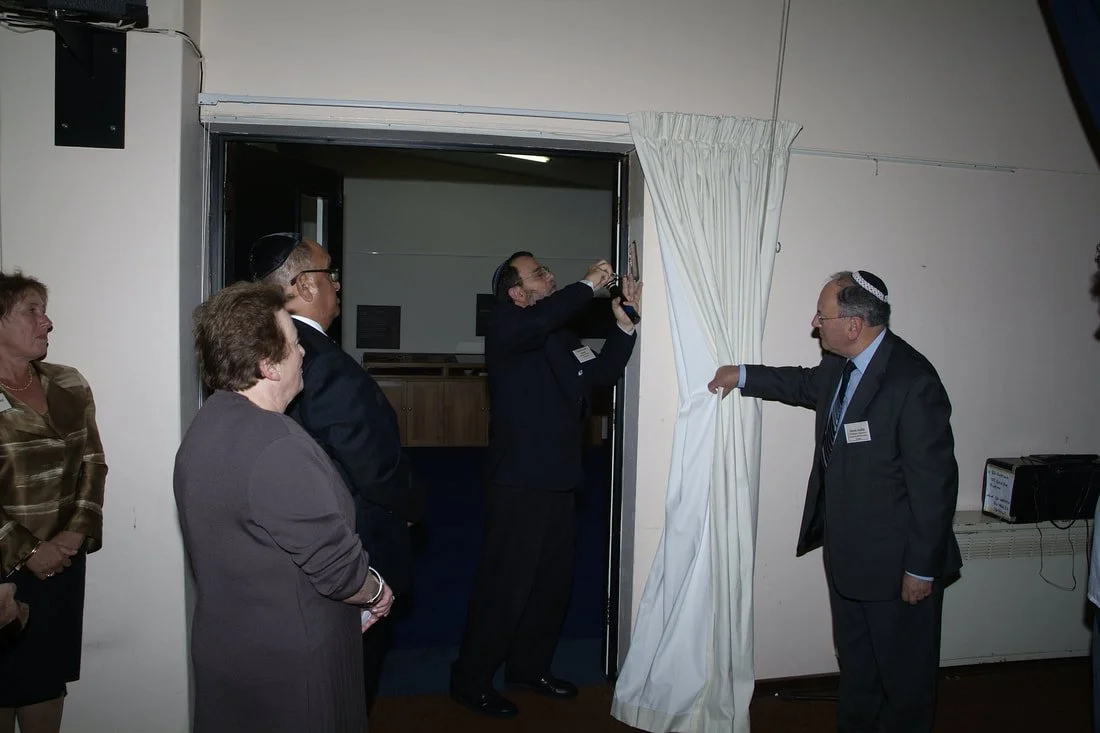
Rabbi Chaim Dovrat affixes a Mezuzah on the doorpost
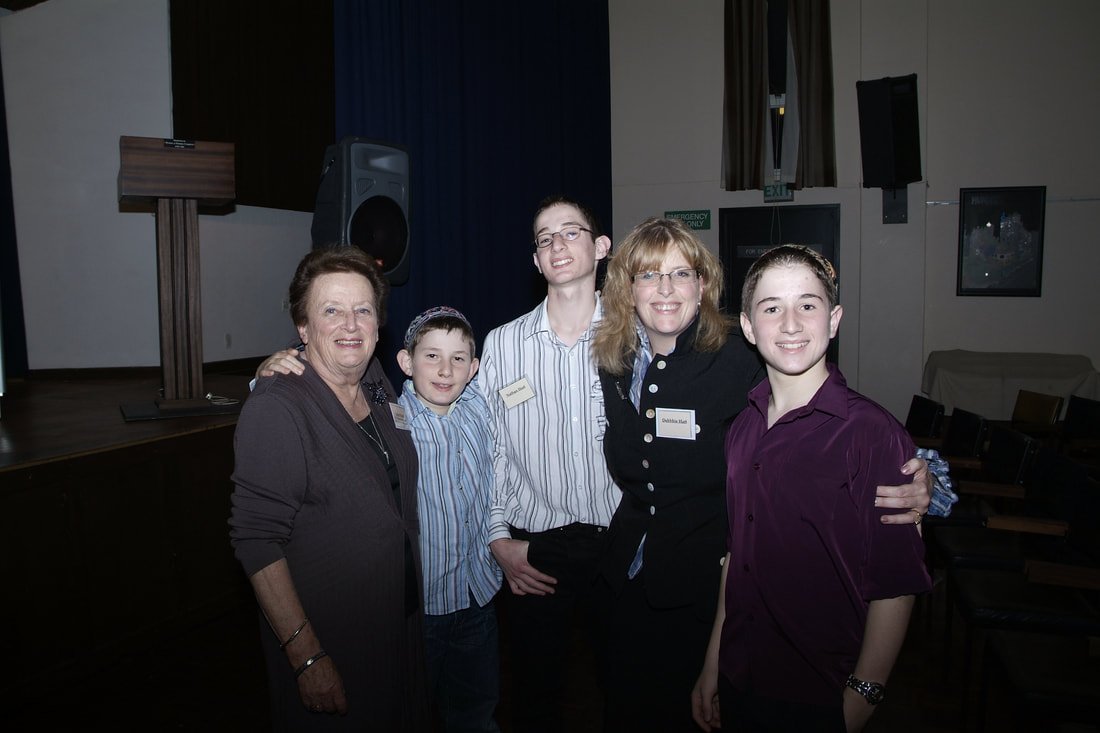
Inge Woolf z"l and her daughter Deb Hart and sons Sam, Nathan, and Jason.
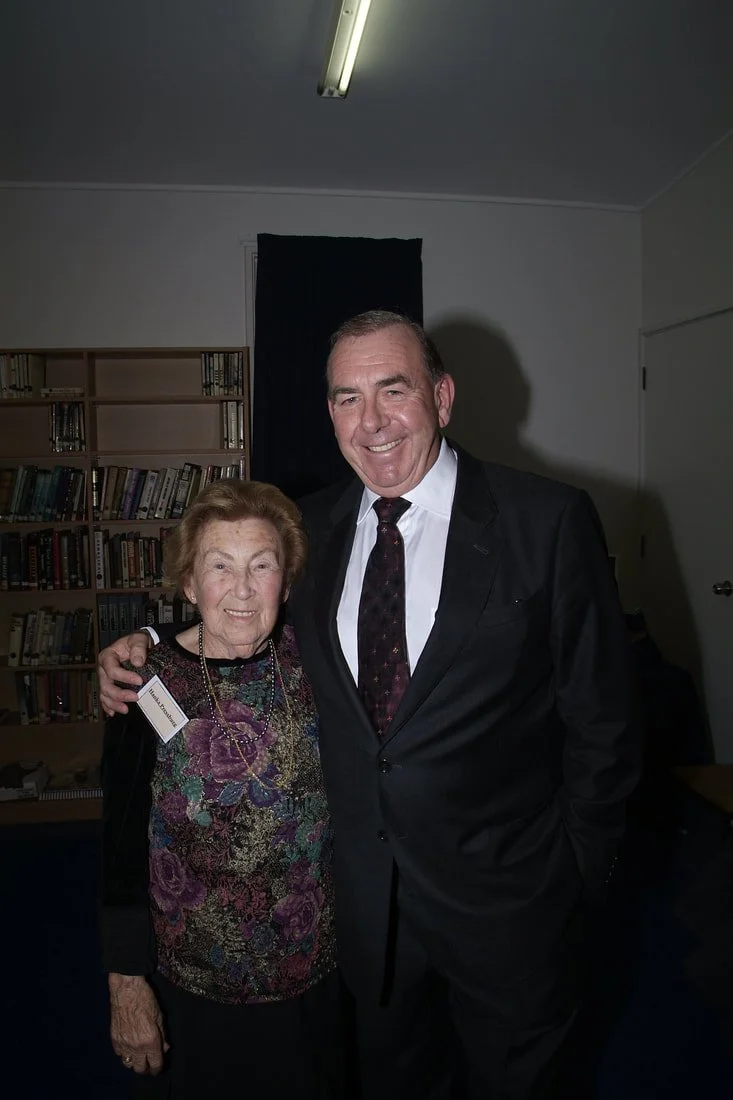
Holocaust survivor Hanka Pressburg z"l with broadcaster Ian Fraser. Hanka and her husband George Pressburg z"l – whose stories feature in the Centre's core exhibition – established the first small Holocaust display in 1990.
Growth and national recognition
From its inception, the core focus of the Centre has been the global history of the Holocaust as told through its direct connection to New Zealand. We choose to spotlight the resilience of survivors who arrived here and went on to contribute richly to the cultural, civic, and business landscape of New Zealand.
Our milestones over the years include:
2013 educational fellowship: To empower local educators, the Centre established a biannual programme initiated by Inge Woolf. This initiative sends cohorts of New Zealand teachers to the International School for Holocaust Studies at Yad Vashem in Jerusalem, equipping them with advanced skills to teach this challenging history in modern classrooms. Now known as the Inge Woolf Memorial Seminar for NZ Educators at Yad Vashem, each seminar supports approximately 25 educators.
2012 national expansion: To reflect a growing national footprint, the organisation formally adopted the name Holocaust Centre of New Zealand. The Centre moved into a larger, purpose-built facility within the former billiard room of the Wellington Jewish Community Centre. Opened on Yom HaShoah, 19 April 2012, by Chief Human Rights Commissioner David Rutherford, this expanded space allowed for larger exhibition displays and hosted cohorts of over thirty students at a time.
2011 Diversity Award: The Centre received one of 12 New Zealand Diversity Awards from the New Zealand Human Rights Commission, validating its impact on community harmony. Founding Director Inge Woolf z”l noted that the basic aim was to tell of humanity lost, of resilience and survival, and to teach tolerance, courage, and racial harmony. Minister for Ethnic Affairs, the Honourable Hekia Parata, added that the Centre's work helped ensure the potential of New Zealand's growing diversity was fully realised.
Elements of our permanent collection
The Centre’s educational materials and displays recount history through physical evidence and the active lives of survivors who found refuge in New Zealand. Key features include:
The Children's Holocaust Memorial: The story, and a portion of the 1.5 million buttons gathered to remember and honour the 1.5 million children killed during the Holocaust, the vast majority of whom were Jewish.
Demographic mapping: A comprehensive pre and post WWII map of Europe's Jewish population, visually demonstrating the catastrophic impact of the Holocaust.
The Deckston Orphanage story: Dedicated panels highlighting New Zealand as a safe haven for Polish Jewish children who arrived in the 1930s and survived, contrasting with the tragic fate of the families they had to leave behind.
The Universal Declaration of Human Rights: Prominently displayed as the unified response of a stunned international community to the atrocities of the Holocaust and the Second World War, framing fundamental rights for all people.
Local testimonies and artefacts: Personal stories and video interviews from Auschwitz survivors Hanka Pressburg z”l and Clare Galambos Winter z”l, alongside historic artefacts. This includes two donated suitcases that tell the narrative of two German sisters: one who migrated to New Zealand and survived, and one who perished in Germany after successfully sending her children to safety in New Zealand via the Kindertransport.
National commemoration and the future
Commemoration remains a pillar of our identity. The Centre coordinates major annual public Holocaust events across the country, which are frequently attended by politicians, diplomats, civic leaders, survivors, and their descendants:
International Holocaust Remembrance Day: Instituted by the United Nations General Assembly in 2005, International Holocaust Remembrance Day coincides with the anniversary of the liberation of Auschwitz-Birkenau. It is commemorated annually on and around January 27 in Auckland, Hamilton, Napier, Wellington, Nelson, Christchurch, and Dunedin.
Kristallnacht Concerts: In both Auckland and Wellington, commemorative concerts are held every year in November to commemorate Kristallnacht or The Night of Broken Glass – the pogroms against Jews throughout Nazi Germany on 9-10 November 1938.
Yom HaShoah: Yom HaShoah was established as Israel’s National Holocaust Remembrance Day in 1959, but is commemorated globally, including across our major city centres in April or May (or the 27th of Nisan in the Hebrew calendar).
What began as a grassroots project by a small team of volunteers has evolved into a successful, vibrant professional organisation run by dedicated staff and volunteer visitor hosts, many of whom are second and third generation survivors, refugees, and scholars. As we move forward, the Holocaust Centre of New Zealand is investing deeply in digital education and active online engagement, ensuring that stories of survival, resilience, and resistance continue to shape a better future.