
New Zealand’s response to the Holocaust
New Zealand’s response to the Holocaust
The following articles examine New Zealand’s official and public responses to the Holocaust as it unfolded, exploring the nation's immigration policies, wartime political stance, and the complex realities faced by those seeking refuge from Nazi persecution.
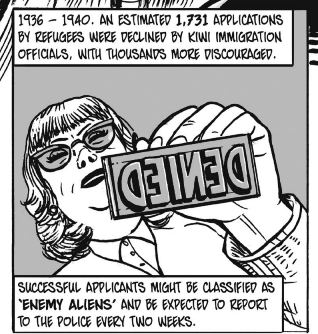
Response of New Zealand’s government to Jewish refugees/Holocaust survivors, 1933–1948
By Dr Ann Beaglehole
Summary:
The core reality: During the 1930s and 1940s, Aotearoa New Zealand maintained a strict immigration preference for British settlers, heavily restricting racial and religious minorities.
The refugee experience: The small number of Jewish refugees and Holocaust survivors permitted entry both before and after World War II faced widespread bureaucratic hurdles, public prejudice, and deep suspicion regarding their cultural differences.
Jewish internees in New Zealand, WWII
By Dr Ann Beaglehole
Summary:
The core reality: During World War II, several Jewish and part-Jewish men who had fled to New Zealand as refugees from Germany and Austria were classified as enemy aliens and interned by the government.
The camp experience: For three to four years, these anti-fascist refugees were imprisoned alongside ardent German Nazis at camps on Matiu/Somes Island in Wellington Harbour and at Pahiatua. They were strictly guarded under the ironic bureaucratic rationale that they might somehow escape and assist their mortal enemies.
The Deckston children - From Bialystok to Wellington
The benefactors: Annie and Max Deckston, Jewish immigrants originally from Belarus, arrived in New Zealand in 1900. After moving from a farm in Lower Hutt to Wellington, they built substantial wealth through property and business investments, which they chose to use to help others.
The rescue: Being childless, the Deckstons funded and organised the immigration of 20 Jewish children from orphanages in Bialystok, Poland, to save them from growing European instability and ultimately the Holocaust. The children arrived in two groups – eight in 1935 and twelve in 1937 – and were cared for at the Deckston Home in Berhampore, Wellington, where they were raised in a traditional Jewish environment.
The legacy: While some of these rescued children fully assimilated into New Zealand society as they grew up, others eventually migrated to Australia to reconnect with the larger Bialystok Jewish diaspora community established there.
The Christchurch Refugees' Emergency Committee (CREC)
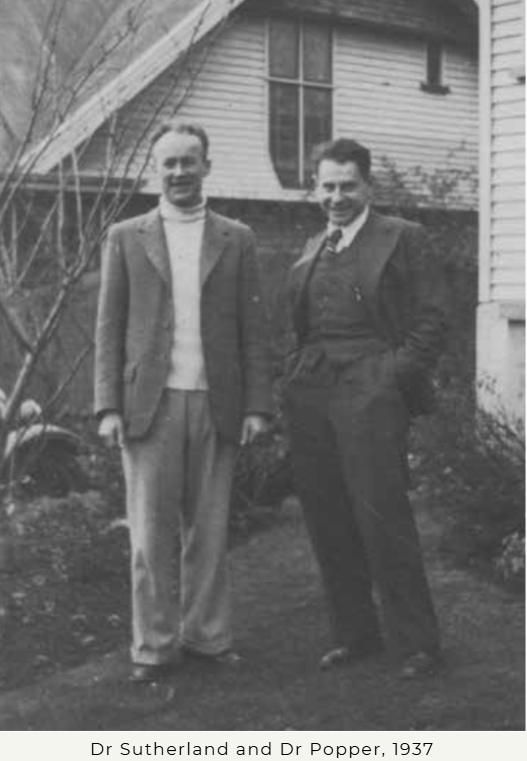
The advocacy: Formed in 1938 by a group of prominent academics and intellectuals – including Dr. Ivan Sutherland, Dr. Karl Popper, Dr. Roy Milligan, and Dr. Otto Frankel – the committee worked tirelessly to support Jewish and other refugees fleeing Nazi-occupied Europe.
The domestic climate: The group operated in a contentious political climate. The New Zealand Government remained highly reluctant to admit refugees due to fears over local unemployment rates and an ironic concern that admitting more Jewish immigrants would trigger a rise in domestic antisemitism.
The outcome: The Committee continued its efforts throughout World War II (1939-1945). Over its eight years of operation, it supported 108 applications representing 216 individuals. Ultimately, only 32 applications (61 people) were granted entry permits, meaning approximately 70% of the applications they backed were denied by the government.
Read more below about the Committee and the stories of six of the people they supported to find refuge in New Zealand.
New Zealand's Kindertransportees
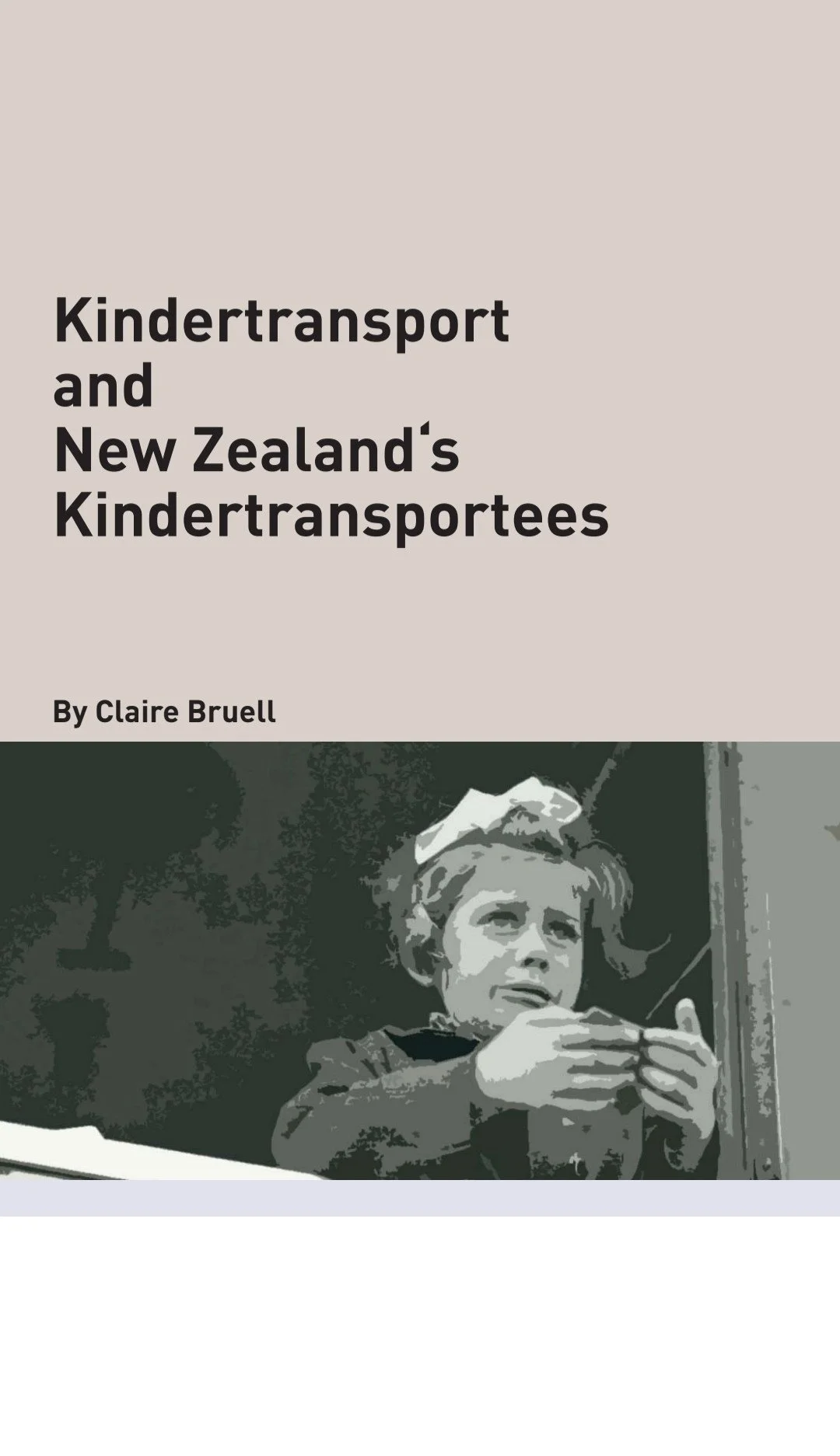
By Claire Bruell
The global rescue: The Kindertransport was an organised rescue effort between 1938 and 1940 that saved nearly 10,000 predominantly Jewish children from Nazi-occupied Europe. While the vast majority were taken in by Great Britain, smaller groups found refuge in other Western European nations, the USA, and eventually, New Zealand.
The local project: A collection of 13 specific stories was compiled by Claire Bruell, drawn from a repository of over 90 oral history recordings with Holocaust survivors living primarily in Auckland, alongside vital contributions from their families.
The outcome: Though these individuals suffered the profound trauma of a stolen childhood and permanent separation from their parents, they went on to lead deeply fulfilling lives. Settling in New Zealand, they studied, built families, and spent their adult lives as highly active, positive contributors to society here.
Jewish doctors in New Zealand, 1933-1945
The crisis in Germany: During the 1930s, the Nazi regime systematically stripped Jewish doctors of their right to practice medicine, banning them from general hospitals and medical schools. Those who had the means began fleeing the country to find refuge and work abroad.
The New Zealand barrier: To practice in New Zealand, the government steadily increased the academic hurdles for foreign-qualified doctors. The requirement to study at the Otago Medical School in Dunedin was raised from one year to three years in 1936/37, and finally to the full six-year medical degree program in 1938.
The numbers: Out of 68 foreign doctors granted entry permits to New Zealand during this period, only 34 were ultimately registered to practice. Out of more than 2,000 Jewish doctors practicing in Berlin at the start of the Nazi regime, only eight successfully gained employment in New Zealand.
Diaspora by Design: Jewish refugee architects and Wellington city
The cultural influx: During the 1930s, New Zealand became home to a wave of highly trained artists, architects, and musicians fleeing Nazi persecution in Europe.
The architectural legacy: Six Jewish refugee architects in particular Helmut Einhorn, Ernst Plischke, Friedrich Neumann (later Newman), Henry Kulka, Maximillian Rosenfeld, and Robert Fantl, exerted a profound, lasting influence on New Zealand’s modernist architectural landscape and design culture.
The research: In 2015, coinciding with Wellington's 150th anniversary, a collaborative exhibition titled Diaspora by Design: Jewish Refugee Architects and Wellington City was launched by the Holocaust Centre of New Zealand and Victoria University's School of Architecture. The exhibition was built upon a research report authored by Chloe Fitzpatrick during a university-facilitated internship.